Your water heater is the most ignored appliance in the house. It sits in a garage corner or a utility closet, works silently for years, and gets no attention at all until the morning the shower runs cold or a puddle appears underneath it. By then the damage is usually done: sediment baked onto the tank bottom, an anode rod dissolved to a wire, a relief valve seized shut. In Brighton, where hard water accelerates all three problems, the gap between a serviced heater and a neglected one is measured in years of life. The good news is that the maintenance itself is simple — a short annual checklist, most of it doable in an afternoon, that keeps the tank efficient, quiet, and far from an early replacement. Here is the checklist most homeowners skip, in the order that matters.
1. Flush the sediment out — the single most skipped job
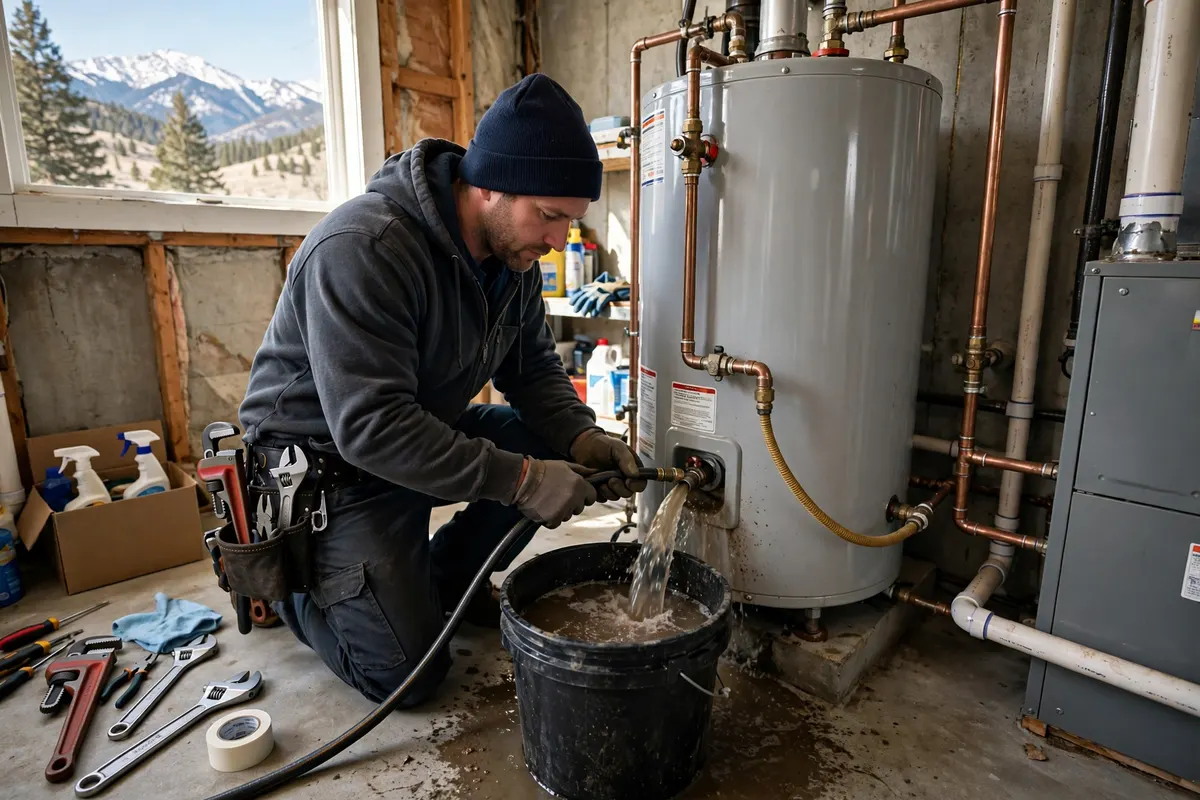
Brighton's hard water drops mineral sediment into the bottom of every tank heater, a little with every heating cycle. Left alone, that sediment forms a crusty layer that insulates the water from the burner or element, so the heater works harder, heats slower, and makes the popping and rumbling noises homeowners often mistake for a dying tank. Flushing is straightforward: turn off the power or gas, shut the cold-water supply, attach a garden hose to the drain valve, and run it to a floor drain or outside. Open a hot tap somewhere in the house so air can enter the tank, then open the drain valve and let the tank empty. When the water runs clear, briefly reopen the cold supply to stir up the last sediment, drain again, then close up and refill. A heater flushed yearly stays quiet; one never flushed may not flush at all, its drain valve clogged with the sediment it was meant to release.
2. Check the anode rod — the part that dies so the tank does not
Inside every tank heater is a sacrificial anode rod: a magnesium or aluminum rod that corrodes in place of the steel tank. It is what keeps a steel tank from rusting through in a few years — and almost nobody knows it exists. An anode rod typically lasts three to five years in hard water, and once it is gone, the tank itself starts corroding. Checking it means shutting the heater down, unscrewing the rod from the top of the tank, and looking at what is left. If it is down to a thin wire, coated in calcium, or less than half its original thickness, replace it. A new rod is a small job next to a new heater, and in hard-water towns like Brighton it is the highest-value maintenance item there is. If the rod is seized and will not budge, or the top of the tank is too close to the ceiling to withdraw it, that is a job for a plumber with the right tools — do not force it and risk damaging the tank.
3. Test the temperature and pressure relief valve
The T&P valve is the water heater's safety device: if temperature or pressure inside the tank climbs too high, the valve opens and releases water before the tank can fail. A valve that has sat untouched for years can seize shut, and a seized safety valve is a genuine hazard. Testing it is quick: lift the lever on the valve briefly and let it snap back. You should hear water discharge through the drain pipe, and the valve should seal again when released. If nothing comes out, if it keeps dribbling after the test, or if the lever will not move at all, the valve needs replacing — promptly, not at the next service. Check that the discharge pipe runs downward to a safe drain point and is not capped, blocked, or routed uphill; a relief valve with nowhere to discharge protects nothing. This is one test worth doing every year without fail, even if you skip everything else on this list.
4. Inspect the outside: leaks, rust, venting, and clearance
Some of the most useful checks need no tools at all. Walk around the heater and look for:
- Drips or rust stains at pipe connections, the drain valve, and the base of the tank — any of these means a seal or the tank itself is failing.
- Rust or white mineral crust on the tank jacket, especially near the top fittings, which signals a slow seep.
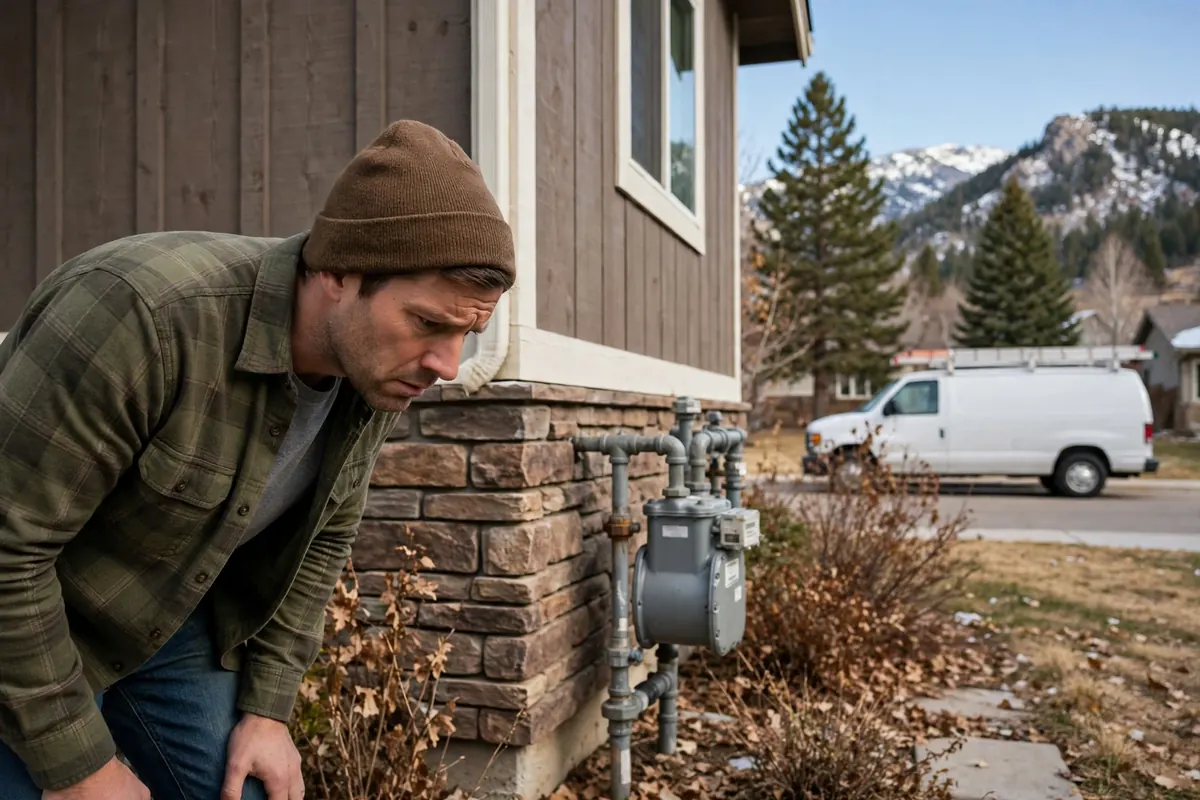
- Scorch marks, soot, or a melted draft hood on a gas heater, which points to venting trouble that needs attention right away.
- Flammable items stored against or above the heater — paint cans, boxes, and cleaning supplies belong elsewhere.
- A temperature setting above 120 degrees Fahrenheit, which wastes energy and risks scalding; 120 is the right setting for most households.
- For tankless units, a different annual job: descaling, which flushes mineral buildup out of the heat exchanger and keeps efficiency and flow where they should be.
5. Set the calendar — and know when to call instead
The checklist only works if it actually happens, so tie it to something you already do every year: the first cold snap, a birthday, the start of heating season. A tank heater that gets this treatment annually will commonly reach the top of its expected life in Brighton's hard water; one that gets none of it often fails years early, usually at the worst possible moment. Call a plumber instead of doing it yourself if the drain valve will not open, the anode rod is seized, the T&P valve fails its test, you smell gas near a gas heater, or the tank is already leaking. A leaking tank is not a maintenance item — it is a replacement, and the sooner it is handled, the smaller the water damage. Annual maintenance does not make a water heater last forever, but it does decide whether yours fails on your schedule or on its own.