Natural gas has no smell of its own, so utilities add mercaptan — the rotten-egg odour — specifically so a leak announces itself. That smell is a warning system, and it deserves an immediate response, not a wait-and-see approach. A gas leak can fill a home with flammable gas, and it can also sicken the people inside long before anything ignites. The good news is that the response is simple and it works: get everyone out, touch nothing electrical, and call for help from outside. This guide covers the signs that point to a leak, the exact steps to take, and the things people commonly do wrong in the moment.
1. The smell: the sign most people notice first
The classic sign is the rotten-egg or sulphur smell near a gas appliance, a gas line, or anywhere in the home. Because the odour is added deliberately, even a faint trace matters — a leak does not have to smell strong to be serious, and the smell can come and go as air moves through the house. Trust your nose the first time: if you smell gas, act as though there is a leak until someone qualified proves otherwise. Do not try to hunt the leak down yourself, and do not assume a faint smell is harmless because it fades when you open a window. Ventilating the house is not a fix, and it can mask a leak that is still releasing gas.
2. Other signs: hissing, dead grass, and unexplained symptoms
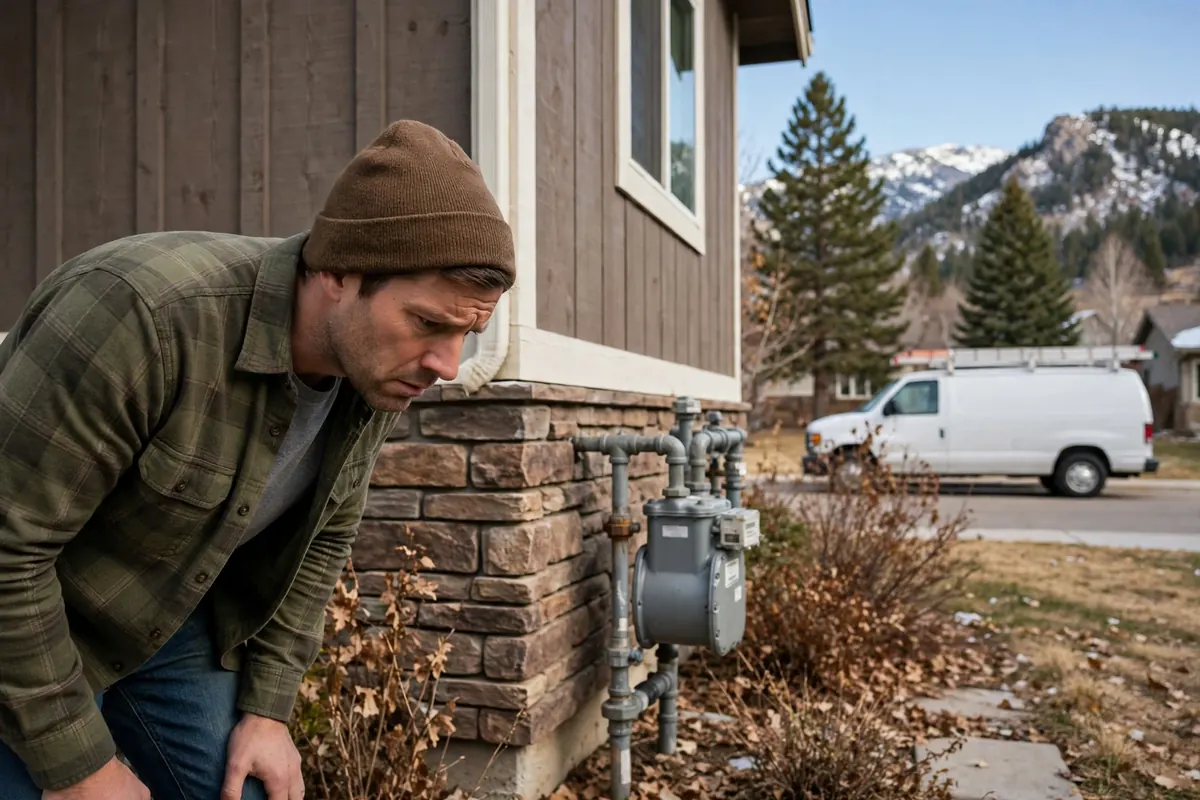
Not every leak announces itself with smell. Listen for a hissing or whistling sound near a gas line, a meter, or an appliance connection — that is gas escaping under pressure. Outside, look for a patch of dead or discoloured grass or vegetation above a buried line, or dirt and dust blowing from a spot in the yard with no wind to explain it. A puddle that bubbles steadily can also point to a leak below. Inside, pay attention to your body: headaches, dizziness, nausea, fatigue, or eye and throat irritation that ease when you leave the house and return when you come back are classic signs of gas exposure. Pilot lights that keep going out, or a gas bill that climbs without any change in use, are quieter clues worth investigating promptly.
- Hissing or whistling near a gas line, meter, or appliance
- Dead or discoloured grass above a buried gas line
- Dirt blowing or a puddle bubbling for no clear reason
- Headaches, nausea, or dizziness that ease outdoors
- Pilot lights that keep going out, or an unexplained bill increase
3. What to do immediately: leave, touch nothing, call from outside
The moment you suspect a leak, get everyone — people and pets — out of the house, and leave the door open behind you if you can do so without delay. Do not flip light switches, do not use the garage door opener, do not unplug anything, and do not use a phone inside the house: a single spark can ignite accumulated gas. Do not light candles or matches, and do not start a car in an attached garage. Once you are outside and at a safe distance, call 911 or your gas utility's emergency line, then a plumber who handles gas lines — the utility or fire department will make the scene safe and shut the gas off if needed. Do not go back inside to grab belongings, and do not turn the gas back on yourself: only someone qualified should restore service after the leak is found and repaired.
4. What never to do with a suspected gas leak
The most dangerous mistake is treating a gas smell like an ordinary household problem. Do not search for the leak with a flame — the old soap-bubble test is for a plumber working on a depressurised line, not for a homeowner with a live leak. Do not run appliances, the furnace, or the water heater to see whether they still work. Do not assume the smell is coming from a neighbour's house or a passing truck and wait for it to pass. And do not reset a tripped breaker or relight a pilot light in a house that smells of gas. Every one of these actions risks a spark in exactly the wrong place. If you are unsure whether what you smell is gas, treat it as gas: leaving a safe house for a false alarm costs nothing, and staying in a leaking one can cost everything.
5. After the all-clear: repair, inspection, and prevention
Once the utility or fire department has made the scene safe, the leak itself still needs repair by someone qualified to work on gas lines, and the work needs to pass inspection before gas service is restored — that is the rule in Brighton and the surrounding Weld and Adams County towns, and it protects your household and your home's resale story. Common repairs include a failed appliance connector, a corroded section of line, or a loose fitting, and a good technician will pressure-test the system after the repair to confirm nothing else is leaking. For prevention, have gas lines and appliance connectors checked when appliances are replaced or moved, keep the area around the meter clear, and call promptly about any new smell rather than living with it. Gas lines last a long time when they are installed properly and left alone — the trouble starts when a small problem is ignored.