In Colorado, a sump pump is the quiet guardian of a basement — until the one spring it is needed most and it does not start. Winter snow piles against foundations, spring brings a fast melt, and the same storms that drop the rain also knock out the power. That combination is exactly why sump pumps exist in Brighton and across the Front Range: they catch groundwater before it reaches the basement floor and send it where it cannot do damage. This guide covers how the system works, why the backup matters as much as the pump, and how to test yours before snowmelt season arrives.
1. Why Colorado basements need a sump pump
Brighton sits on the high plains east of the Rockies, where winter snowpack and spring storms deliver a lot of water in a short window. When the snow melts, the ground can only absorb so much — the rest moves toward the lowest point it can find, and for many homes that is the basement. The clay-heavy soil across Adams and Weld counties makes it worse: it swells when wet, drains slowly, and holds water against foundation walls. Add a high seasonal water table near the South Platte River, and many Brighton-area homes sit in ground that stays wet for weeks each spring. A sump pump does not fight that water — it collects it in a pit at the lowest point of the basement and moves it outside before it can seep through the floor or the wall-to-slab joint. Without one, the first sign of trouble is often a damp carpet edge or a musty smell that arrives with the first warm week of the year.
2. How a sump pump actually works
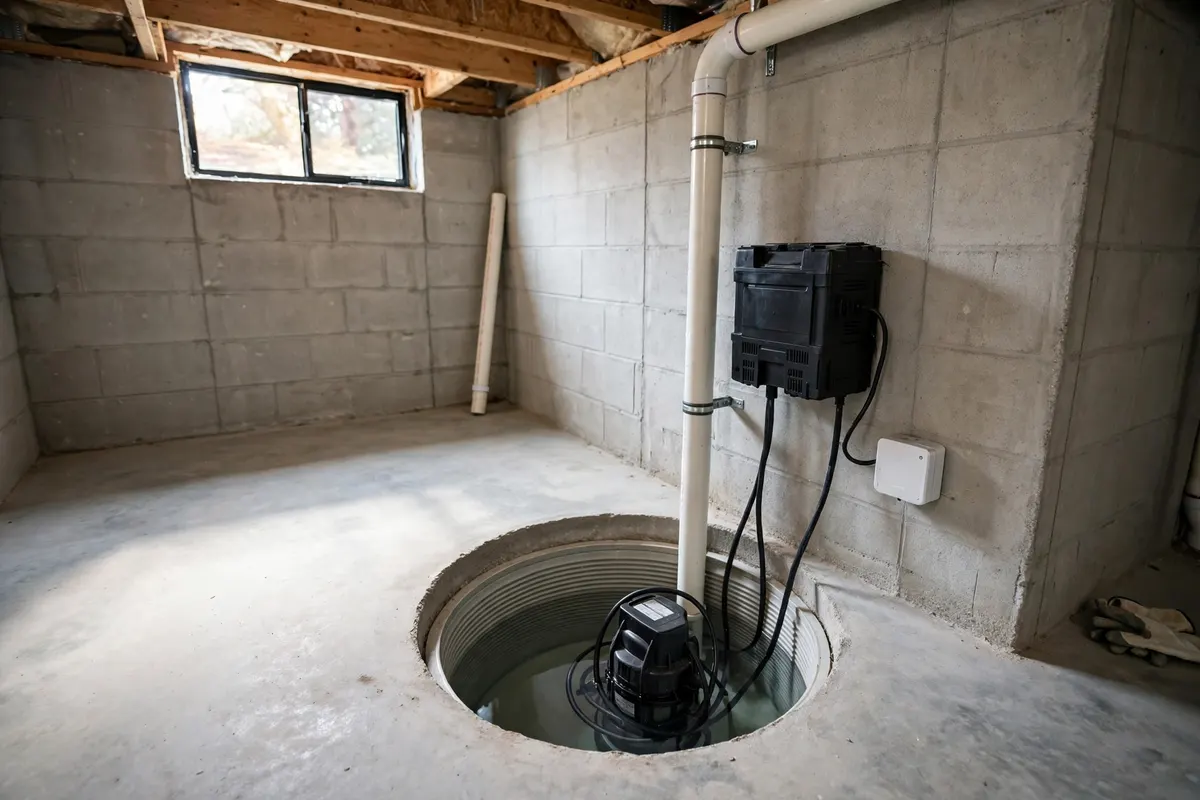
The system is simple. A pit — usually a basin set into the basement floor at the lowest point — collects water that drains in through the foundation drain tile or seeps in from the soil. Inside the pit sits the pump, with a float switch on top. As water rises, the float rises with it; at a set level it switches the pump on, and the pump pushes the water up and out through a discharge pipe. A check valve stops water flowing back into the pit when the pump shuts off — without it, the pump would cycle endlessly on the same water. The discharge line should carry the water well away from the house, downhill if possible, so it cannot simply soak back toward the foundation. Most pumps are submersible models that sit in the water itself — quieter, better with debris, and the common choice in finished basements — while pedestal models keep the motor above the pit.
3. Battery backup: the part that matters when the power goes out
A sump pump runs on electricity, and the worst storms are exactly the ones that take the power out. That is the cruel timing of basement flooding: the pump is needed most in the hour the grid goes down. A battery backup system answers that. It is a second pump in the same pit, powered by a deep-cycle battery that takes over automatically when the main pump loses power or fails. A healthy battery typically runs the backup for several hours of intermittent pumping — enough for most outages. Some homes add a second layer: a water-powered backup that uses municipal water pressure to move sump water, with no battery and no electricity at all. Whichever route you take, the backup needs its own alarm, so you know the primary pump has failed instead of discovering it when the basement floor is wet. A backup that nobody tests is a hope, not a plan.
4. Testing yours: a ten-minute check before snowmelt season
The best time to find out your pump does not work is on a dry afternoon, not during a storm. Run this check once a year, before the spring melt, and again after any basement work:
- Pour a bucket of water into the pit until the float rises and the pump starts; it should empty the pit and switch off cleanly
- Listen for grinding or rattling — a healthy pump hums steadily and shuts off without straining
- Check the discharge line outside: water should flow well away from the house, and the outlet should be clear of ice and debris
- Lift the float by hand to confirm it moves without sticking and is not tangled in the cord or stuck against the pit wall
- Unplug the main pump briefly and confirm the battery backup engages, then plug the main pump back in
- Check the alarm by triggering it, and confirm the battery indicator shows a full charge
- If the pump runs but the pit never empties, the discharge line may be clogged or frozen — clear it before the next storm
5. Signs yours is failing — and when to call a plumber
Sump pumps rarely fail without warning, but the warnings are easy to miss if the pit is out of sight. A pump that cycles every few seconds is usually fighting a failed check valve or a wrongly set float switch. A pump that runs constantly may be undersized for the water coming in, or its discharge line may be partly blocked. New noises — grinding, rattling, or a motor that hums without moving water — point to a worn impeller or a failing motor. Rust, a sticking float, or a pump more than seven to ten years old all argue for replacement before the next melt season rather than after a flood. And if the pit fills faster than the pump can empty it during a storm, the system is undersized for the home — a sizing question worth a professional look. When in doubt, have a plumber inspect the pit, pump, and discharge route together: the fix is usually straightforward, and far simpler on a dry day than on a wet one.