Galvanized steel pipe was the standard for Brighton homes built from the 1940s through the 1970s, and copper took over after that — which means a huge share of the houses in Brighton's older neighborhoods, and in Thornton and Northglenn's mid-century subdivisions, are plumbed with supply lines that are now forty, fifty, or sixty years old. These pipes do not fail all at once. They corrode from the inside out, quietly, for years, and the first signs look like small annoyances: a little rust in the morning water, a shower that is not quite as strong as it used to be. By the time the signs are obvious, the system is usually failing in several places at once. Here are the six signs that mean your pipes are telling you it is time for a repipe — not another patch.
1. Rusty or discolored water
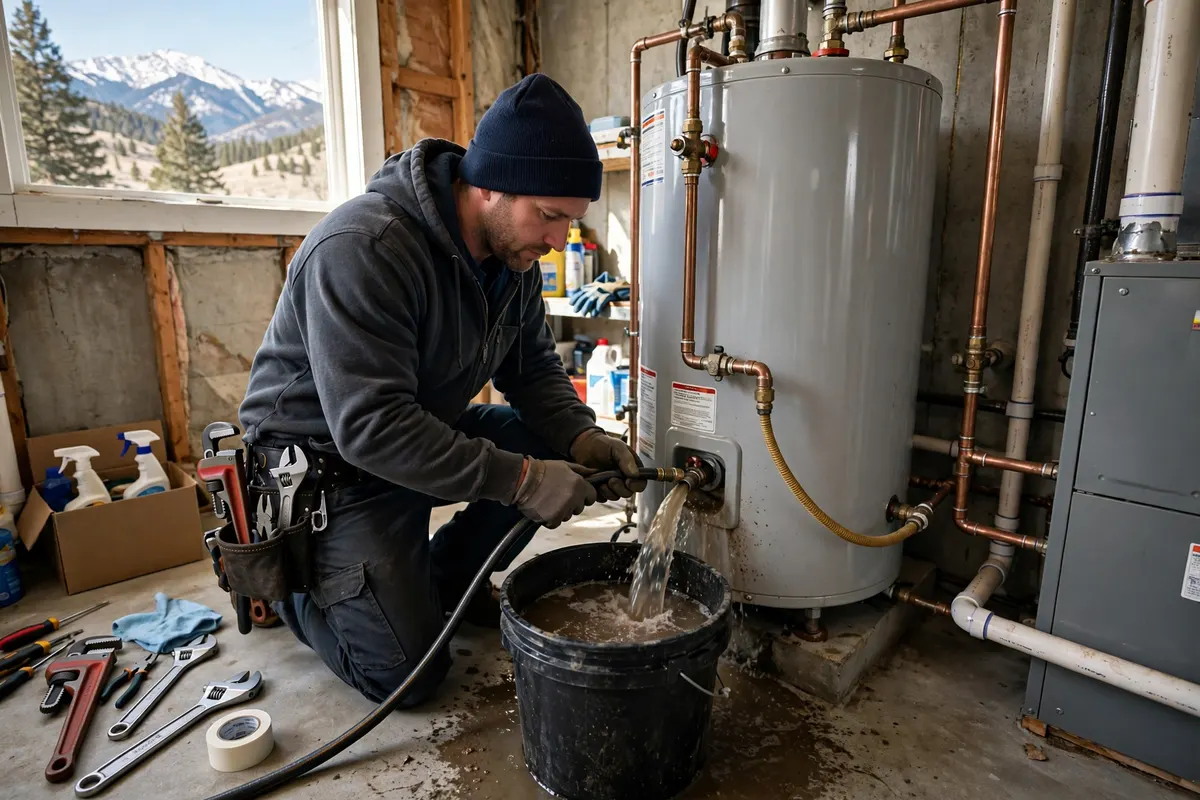
The classic first sign of galvanized pipe failure is water that runs brown, yellow, or rusty — especially first thing in the morning or after the house has sat empty for a few days. That color is rust flaking off the inside of the pipe as water sits against corroding steel, and it clears after a minute of running because fresh water pushes the loose rust through. Do not be reassured by the clearing: the rust keeps forming, the pipe wall keeps thinning, and the discoloration will come back more often and last longer as the corrosion advances. Rusty water also stains fixtures and laundry, and it is a warning that the pipe's interior is rough and narrowing. If only the hot water is discolored, the water heater may be the culprit instead — but when both hot and cold run rusty, the supply lines themselves are the prime suspect.
2. Water pressure that keeps dropping
Galvanized pipe narrows as it corrodes — mineral scale and rust build up on the inside walls until a pipe that started life with a generous bore is carrying a fraction of its original flow. The result is pressure that fades gradually over months and years: a shower that used to be strong now feels thin, the kitchen tap takes longer to fill a pot, and running two fixtures at once turns both to a trickle. The key word is gradually. A sudden pressure drop across the whole house points to a main-line problem or a supply issue; a slow, steady decline that no fixture cleaning or aerator swap fixes points to pipes closing up from the inside. Once corrosion has narrowed a run significantly, no cleaning restores the original bore — the pipe itself has to go.
3. Pinhole leaks — especially more than one
Copper pipe fails differently from galvanized: instead of closing up, it develops pinhole leaks where Brighton's hard, mineral-heavy water has thinned the wall over decades. A single pinhole leak in a thirty-year-old copper run is a repair. A second pinhole in a different room six months later is a pattern, and a pattern means the whole system is at the same stage of wear. Each patch fixes one weak spot while the rest of the pipe keeps thinning toward its own failure, which is why homeowners with pinhole history often describe a stretch of years where the plumber seemed to visit every few months. When leaks start arriving in different rooms, the honest fix is replacing the system, not chasing the next hole.
4. Visible corrosion on exposed pipe
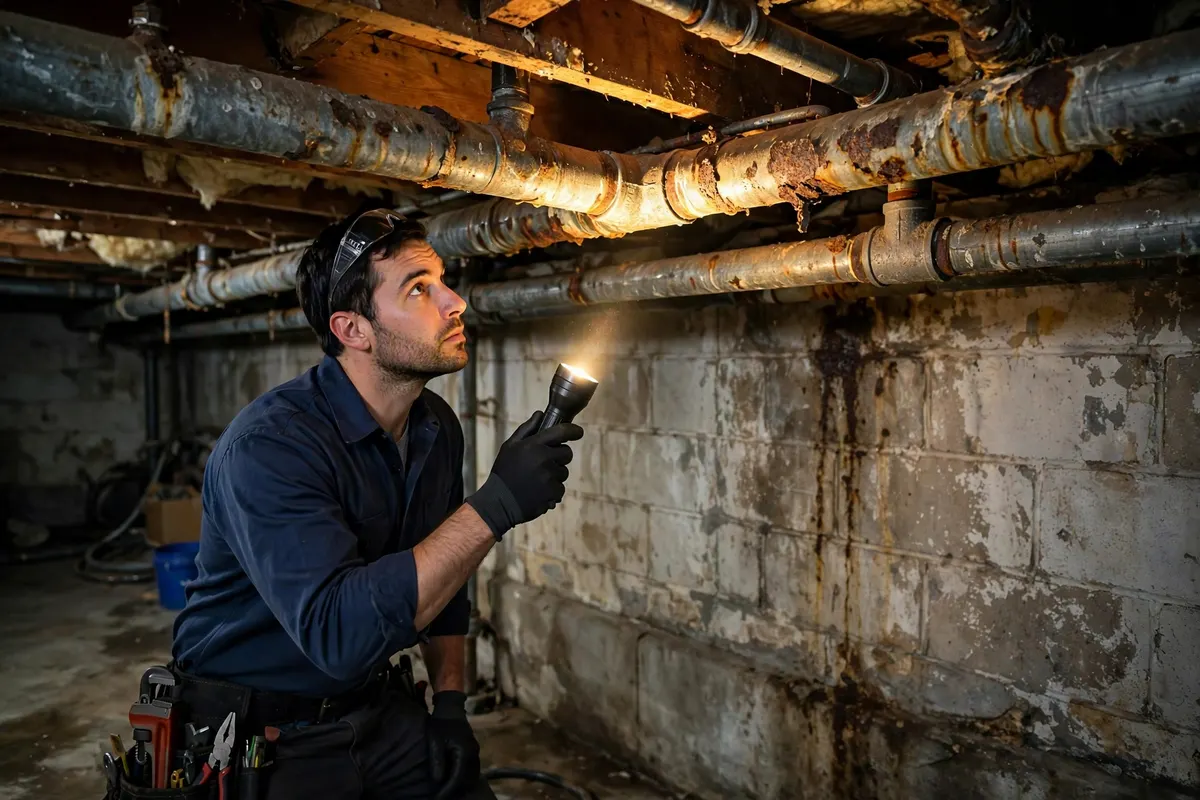
You do not need a camera to read the condition of your pipes — the exposed runs in the basement, crawlspace, and utility room will show you. Look for:
- Flaking, crusty, or bubbled rust on galvanized pipe, especially at joints and fittings where corrosion concentrates.
- Green or blue-green staining on copper pipe or on the fittings around it — the mark of slow, long-term corrosion.
- White, chalky mineral buildup at joints, which signals a slow seep that evaporates and leaves its minerals behind.
- Dimpling or pitting on the pipe surface, and any section that feels rough or scaly to the touch.
- Water stains on the wall or floor beneath a run, even if the pipe looks dry right now — a leak that seals itself with rust will open again.
5. Your home's age — and a repair history that never ends
The last two signs belong together, because they are the ones that turn a suspicion into a decision. Galvanized supply pipe has a reliable life of roughly forty to sixty years, and polybutylene piping from the 1970s through the 1990s is past its reliable life entirely — so a Brighton home built before the 1980s with original plumbing is living on borrowed time even if the water still runs clear. And if your repair history reads like a calendar — a leak fixed in the spring, another in the fall, a third the following year — you are paying for a system that is failing everywhere, one joint at a time. Add up those repair visits and the water damage each one risked, and a whole-home repipe stops looking like a big project and starts looking like the project that ends the cycle. A plumber can confirm the picture with a look at your exposed pipe and, where needed, a camera inspection — and a straight answer on whether a partial repipe of the worst runs is enough, or whether the whole system has earned its retirement.