Low water pressure sounds simple until you try to fix it — because the same symptom, a thin stream from the tap, can come from a dozen different causes, and the fix for one does nothing for the others. Before touching a wrench, notice the pattern. Is pressure low at one fixture while the rest of the house runs fine? Or is every tap weak at the same time? The answer splits the problem in half: a single-fixture problem lives at that fixture or its supply line, while a whole-house problem lives in the shared plumbing — the main valve, the pressure regulator, or the supply lines themselves. Here is how to read the pattern, what to check in each case, and when to call for help.
1. One tap is weak and the rest are fine: the problem is local
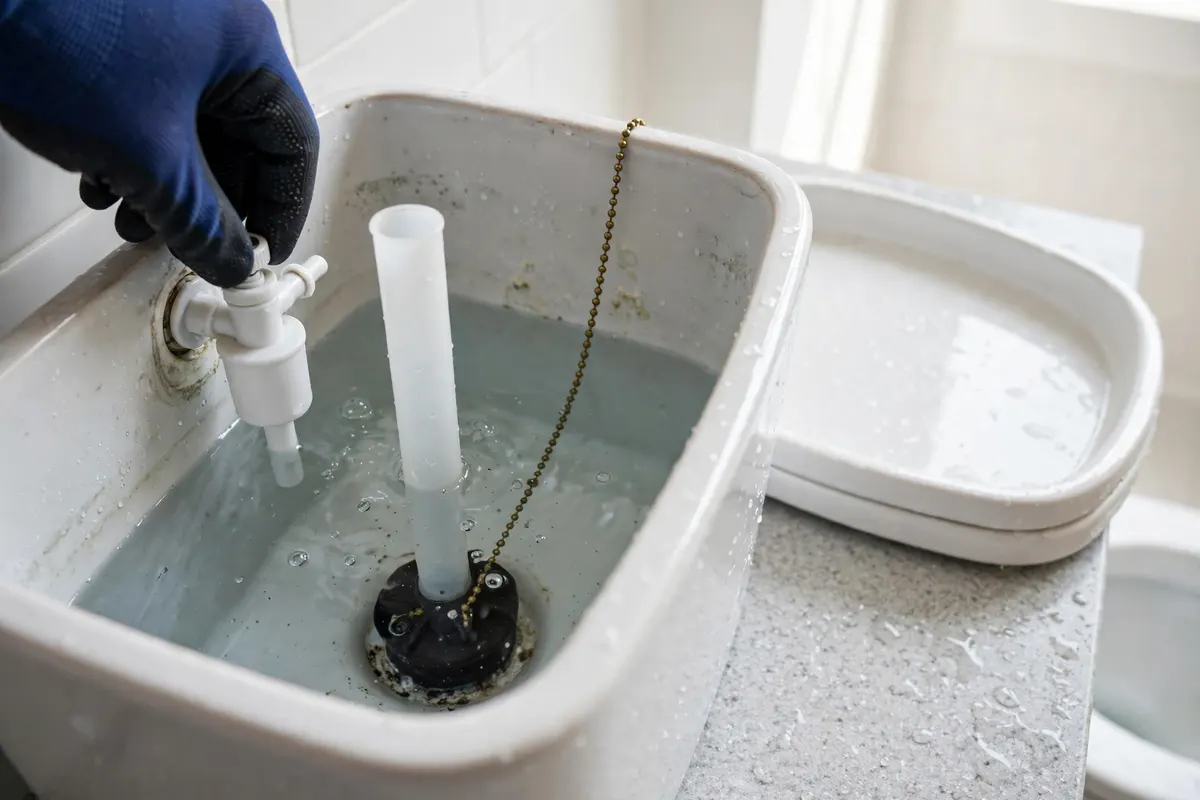
When a single faucet, showerhead, or toilet fill valve underperforms while everything else runs at full strength, the main supply is exonerated — water is arriving fine, and something at that fixture is restricting it. The most common culprit is also the simplest: a clogged aerator, or a showerhead choked with mineral scale. Brighton's hard water leaves calcium deposits inside aerators and showerheads steadily, narrowing the openings until the stream turns thin and uneven. Unscrew the aerator, rinse out the grit, and soak it in vinegar overnight; a showerhead gets the same treatment. Next, check the fixture's own shutoff valve under the sink or behind the toilet: one that is only partially open, or corroded inside so it cannot open fully, will starve just that fixture. Finally, a single fixture with weak flow and discolored water may have a worn cartridge in a single-handle faucet — a cartridge swap usually restores full flow.
2. Every tap is weak: start at the main valve and the regulator
Whole-house low pressure means the restriction is somewhere every fixture shares, and the first two places to look sit near where water enters the home. The main shutoff valve — a lever-handled ball valve or an older wheel-handled gate valve — is sometimes left partially closed after plumbing work. Check that it is open all the way: a ball valve handle should sit parallel to the pipe. Gate valves deserve special suspicion: their internal gates corrode and sag over decades until they block flow even when open. The second shared suspect is the pressure-reducing valve, or regulator — a bell-shaped fitting on the main line that steps street pressure down to a safe level for the house. A pressure gauge screwed onto an outdoor hose bib gives you the number: most homes should read between 40 and 80 pounds per square inch. A reading below that range, or one that falls fast when a tap opens elsewhere, points at the regulator or the main line — both jobs for a plumber rather than a homeowner adjustment.
3. Pressure that fades when more than one fixture runs
A subtler pattern is a house that seems fine with one tap running but collapses when a second fixture joins in — the shower goes thin when the washing machine fills, or the kitchen tap slows while someone showers. This usually means the supply lines cannot carry the volume the house now demands. In Brighton's older neighborhoods the classic cause is galvanized steel supply pipe corroded from the inside out: rust and mineral scale narrow the bore year by year until it can barely feed one fixture at a time. Undersized piping is the other version of the same story — a home that has gained bathrooms or a sprinkler system since it was plumbed may simply be asking more of its original lines than they were sized to deliver. Corroded or undersized lines are a system problem, and the durable fix is replacing the affected runs.
4. Hot water only? The problem is on the hot side
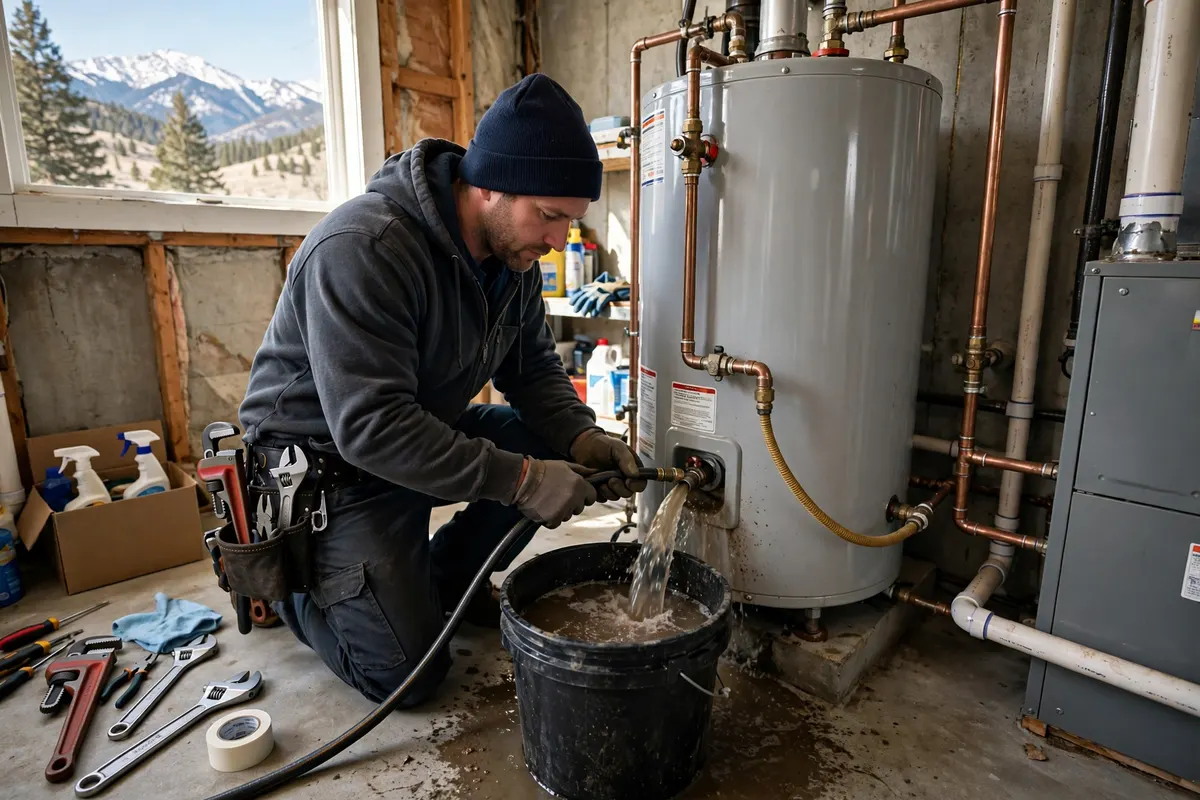
When cold taps run strong but hot taps run weak throughout the house, the restriction is in the hot-water system, and the water heater is the first place to look. Check the shutoff valve on the cold line feeding the heater, which can be left partially closed after service. Inside the tank, sediment is the usual suspect: Brighton's hard water drops mineral sediment to the bottom of the tank year after year, and a heavy layer can restrict flow and send grit downstream to hot-side aerators and showerheads. Flushing the tank clears loose sediment. If the problem returns quickly, the heater may be near the end of its life — a failing dip tube can break apart and send fragments into the hot lines, which points to replacement rather than another flush. One caution: if only one hot tap is weak, check that fixture first before blaming the heater.
5. The checks to run before you call
Work through these in order:
- Check the pattern: one fixture, one side (hot or cold), or the whole house? The pattern is the diagnosis.
- Clean the aerators and showerheads on the weak fixtures. Hard-water scale is the most common single cause, and the cheapest to rule out.
- Confirm the main shutoff is fully open, and the fixture shutoffs under the weak fixtures too.
- Gauge the hose bib with nothing running, then with a tap open inside. Below 40 psi, or a big drop under load, points to the regulator or main line.
- Check the water meter with everything off. If it still moves, a hidden leak is stealing pressure from the whole house.
- Look for leak signs: an unexplained bill spike, damp spots, or warm floor patches. Any of those means a leak check, not a pressure adjustment.