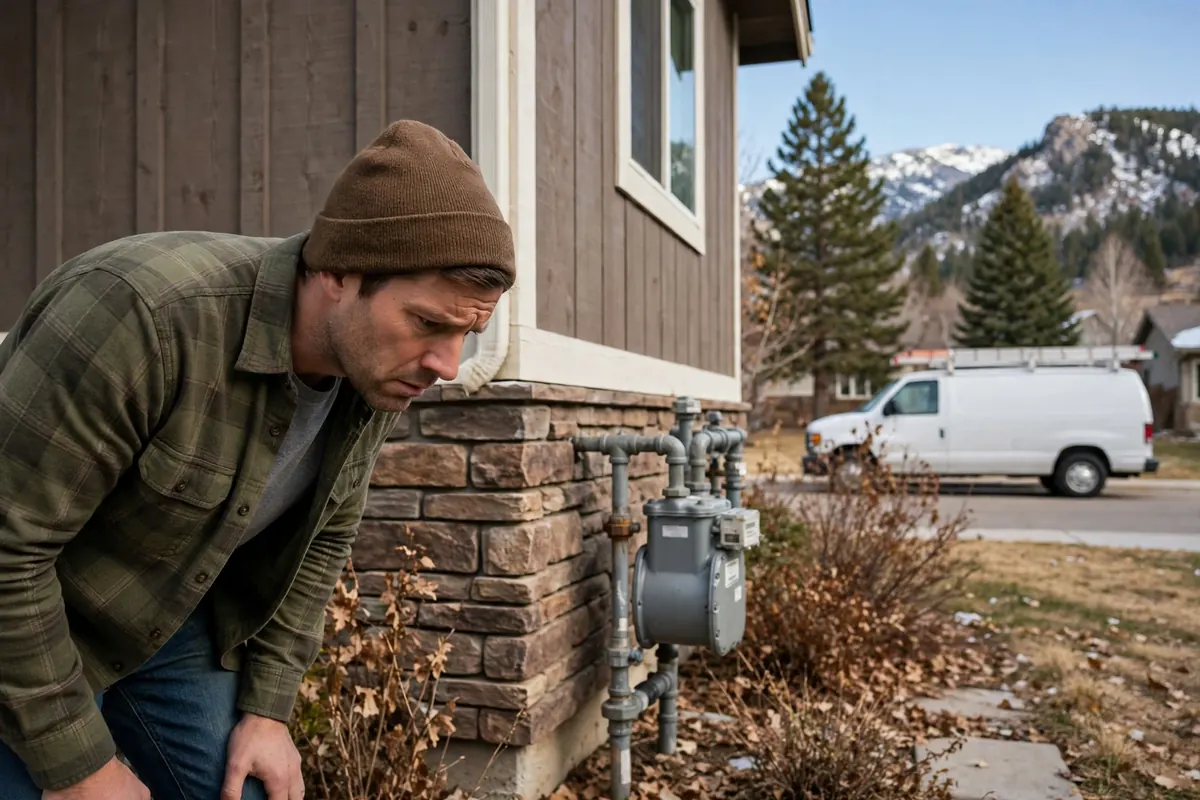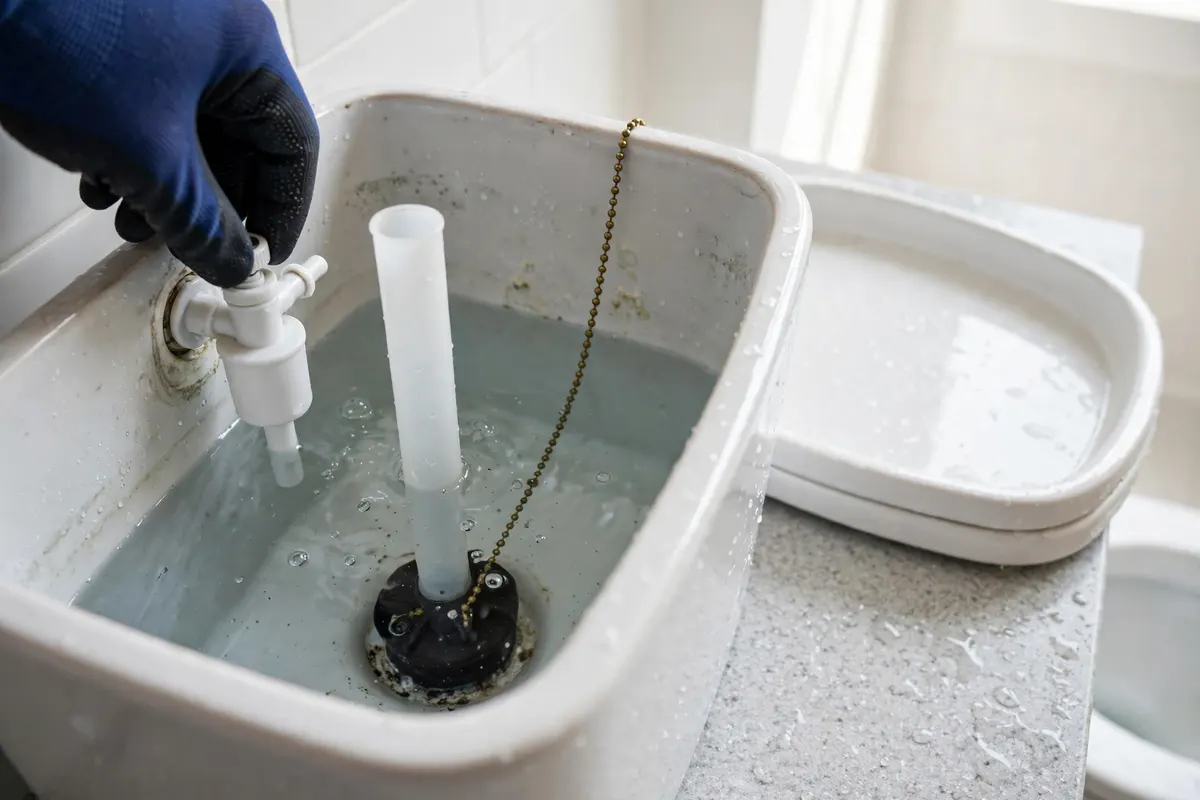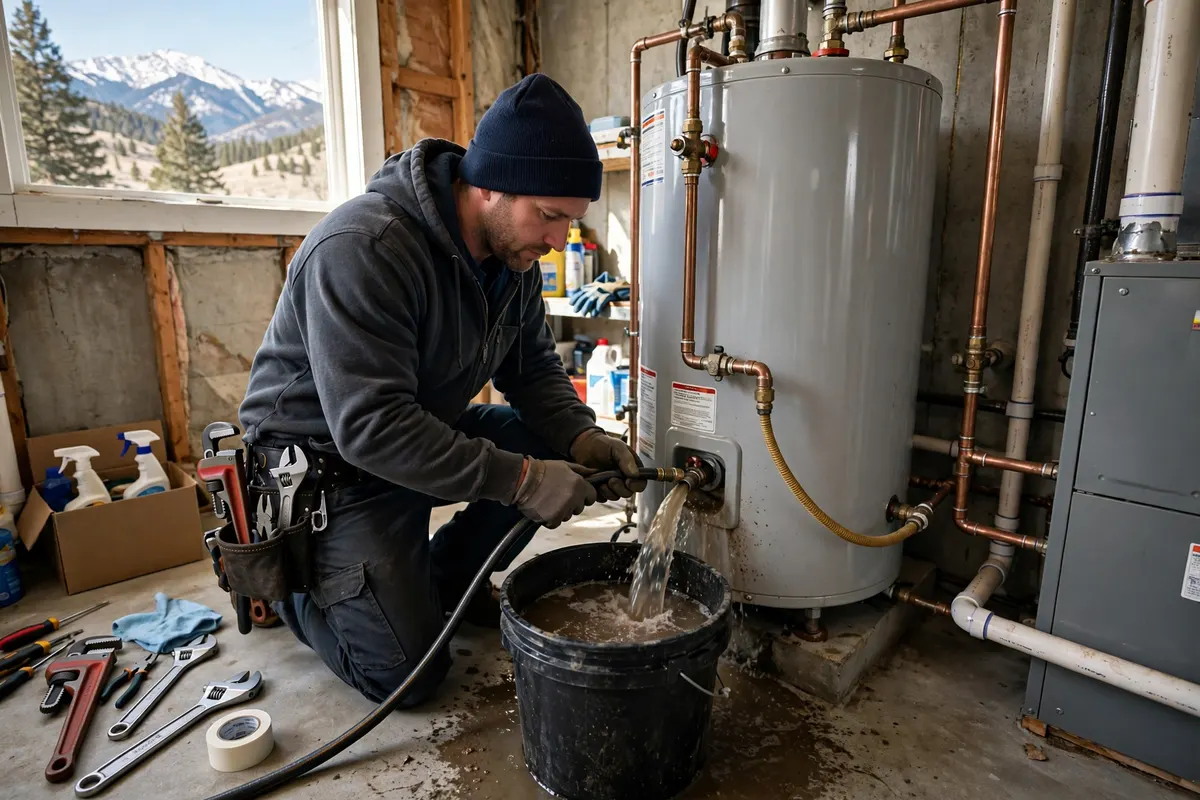
Ask a plumber what single piece of knowledge saves homeowners the most damage, and the answer is almost always the same: where the main water shutoff is. A burst pipe can release hundreds of gallons an hour, and the difference between a mop-up and a ruined basement is usually the five minutes it takes someone to find the valve and turn it. Yet most Brighton homeowners we meet have never actually looked for theirs — they assume it is somewhere obvious, and they plan to figure it out during the emergency, when water is already running across the floor and panic is doing the thinking. This guide fixes that. It takes ten minutes to read, five minutes to act on, and it may be the most valuable home-maintenance task you do this year.
1. The inside shutoff: where to look first
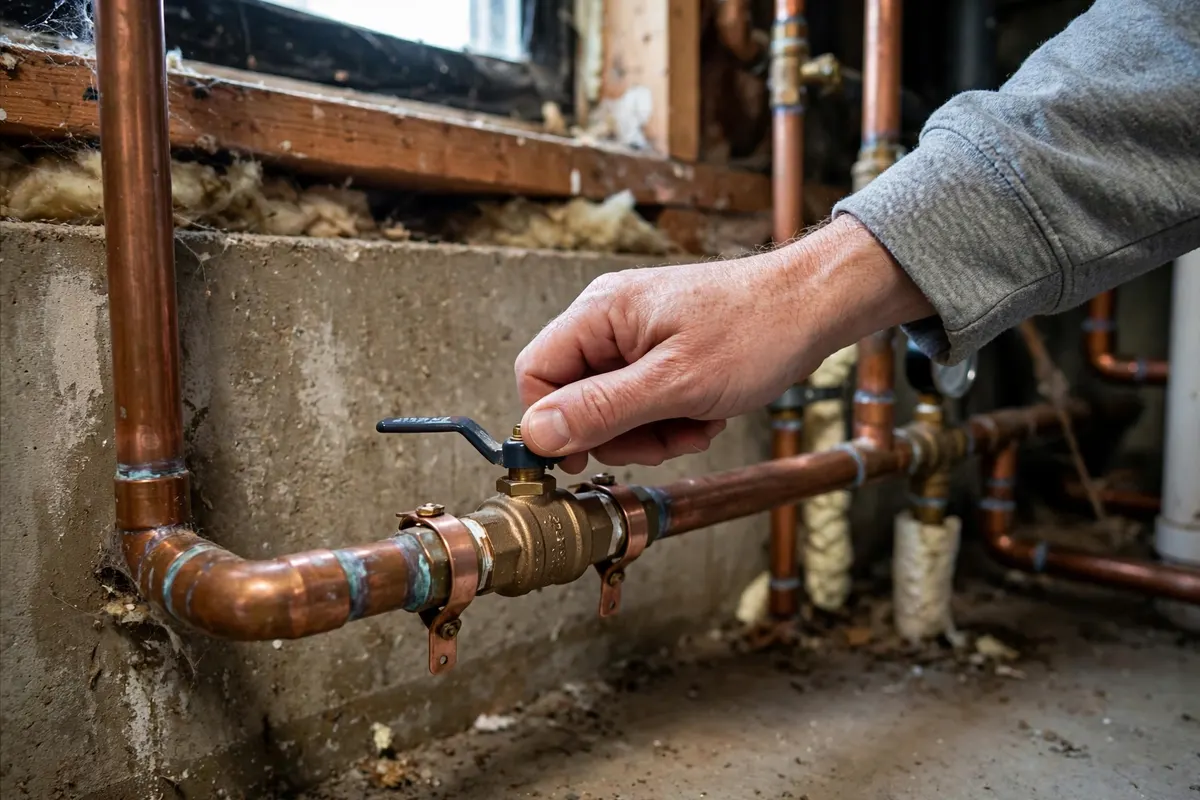
In most Brighton homes, the main shutoff sits on the inside wall where the water line enters the house. Start in the basement or crawlspace, on the wall facing the street — the main line usually comes in from that side. In homes without a basement, check the utility room near the water heater, the laundry room, or a ground-floor closet near the front of the house. You are looking for one of two valve types. A gate valve has a round, wheel-shaped handle and turns counterclockwise to open; a ball valve has a straight lever handle that sits parallel to the pipe when open and turns a quarter-turn to close. Ball valves are newer and easier to operate in a hurry; old gate valves are the ones most likely to seize when you need them most. Once you find it, confirm it is actually the main: it should be on the largest pipe entering the house, before it branches off to the water heater and fixtures.
2. The street shutoff: the meter pit valve
Every home also has a shutoff at the street, in the meter pit near the curb or sidewalk. Lift the lid — it is usually a round or rectangular metal or plastic cover marked with a water symbol — and inside you will find the meter and a valve on the city side of it, sometimes requiring a special T-shaped meter key to turn. The street valve is your backup when the inside valve is stuck, broken, or inaccessible, and it is the valve to use if the leak is in the line between the street and the house. Two cautions: never force a street valve with the wrong tool, and be aware that some water providers prefer homeowners to call them rather than operate the street valve themselves. Find your meter pit on a dry day, make sure the lid lifts freely and is not buried under landscaping, and buy a meter key at a hardware store so one is hanging in your utility room if you ever need it.
3. How to test your shutoff before you need it
A valve you have never turned is a guess, not a plan. Test yours on a calm Saturday, not during a flood:
- Close the inside valve, then open a faucet at the lowest point in the house and one at the highest. Water should slow to a trickle and stop within a minute as pressure drains out.
- Open the valve again and check that full pressure returns and that the valve itself is not dripping at the stem or handle.
- If the valve will not turn, turns but does not stop the water, or leaks when operated, have it replaced before it matters — a shutoff that fails during an emergency is barely better than no shutoff at all.
- While you are at it, test the individual fixture shutoffs too: the small valves under sinks and behind toilets let you isolate one fixture without shutting down the whole house.
4. What to do when you cannot find it — or it will not turn
If you have searched the usual spots and still cannot find a main shutoff, do not wait for an emergency to solve the mystery. Some older Brighton homes have the valve hidden behind a finished wall, buried in a crawlspace corner, or replaced at some point by a previous owner who never labeled anything. A plumber can locate it during a routine visit, tag it, and — if it is buried behind drywall — fit an access panel so it stays reachable. If you find the valve but it is seized solid, do not force it with pliers until it snaps; a broken valve stem turns a routine replacement into an emergency call of its own. A seized main valve is a straightforward scheduled replacement — and a high-value one.
5. Teach everyone in the house, then label it
Knowing the shutoff location yourself is only half the job — the person home when a pipe bursts may be your spouse, a teenager, a houseguest, or a tenant. Walk every adult in the household to the valve, show them which way it turns, and let them turn it once so the motion is familiar. Then label it: a simple tag or a strip of bright tape on the pipe that says MAIN WATER SHUTOFF turns a search into a glance. Do the same for the meter pit — make sure everyone knows roughly where it is outside. Put a note near the breaker panel with the valve location in one sentence, plus your water provider's emergency number. Five minutes of labeling today is what keeps a burst pipe from becoming a flooded house while someone searches for a valve they have never seen.