A water heater rarely dies silently. Months before the morning you wake up to a cold shower and a puddle in the garage, the tank was sending signals — sounds, smells, rust, and shrinking hot-water supply. In Brighton's hard water, tank heaters typically last 8 to 12 years, and the last two of those years are usually full of warnings. Here are the five that matter, in roughly the order homeowners notice them.
1. It rumbles, pops, or bangs
Sediment from hard water settles on the tank floor and hardens. The burner (or element) then has to heat through that crust, and the popping and rumbling you hear is water flashing to steam beneath it. A heater that has started talking to you is working harder, costing more to run, and wearing its tank floor out faster. Flushing can quiet a younger heater; a heavily crusted older one may never run efficiently again.
2. Hot water runs out faster than it used to
The same sediment displaces water and insulates the burner from it, so the tank holds less usable hot water and recovers more slowly. Showers that used to be fine back-to-back start going lukewarm. Dip tube failure causes a similar symptom on younger heaters — worth a diagnosis before assuming the tank is done.
3. Rusty or discolored hot water
Brown or rusty water from the hot side only usually means the tank's interior is corroding or its anode rod — the sacrificial rod designed to corrode instead of the tank — is used up. If the cold water runs clear while the hot runs rusty, the heater is telling you its protective systems are gone and the tank itself is next.
4. Leaks, moisture, or corrosion at the base
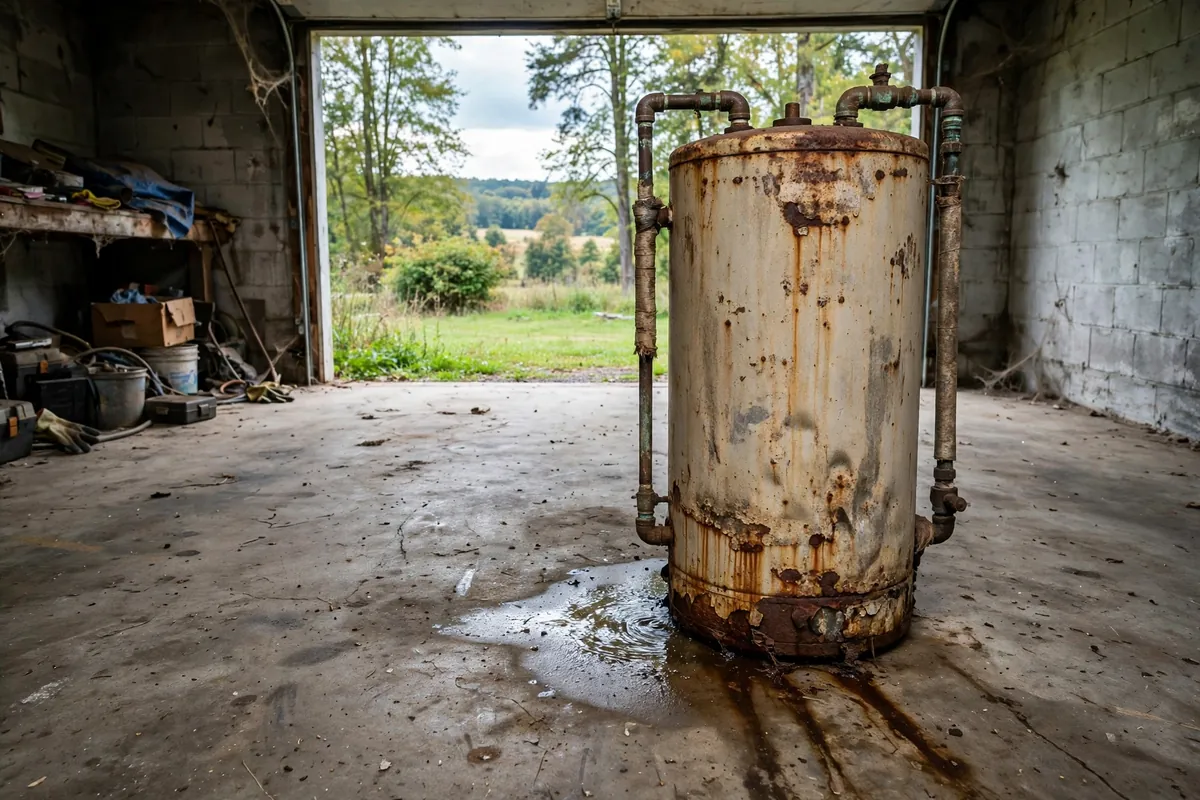
This is the sign that changes the timeline. Water around the base can come from a loose drain valve or a sweating fitting — both fixable — but if the tank shell itself is weeping or rusting through, there is no repair. A tank that has started leaking from the body will rupture eventually, and 'eventually' often means a 40-to-75-gallon flood. If you see corrosion or pooling at the base of an older heater, plan the replacement now, on your schedule, instead of during a flood on the heater's schedule.
5. Age plus repairs that keep coming
One repair on a six-year-old heater makes sense. A second repair on an eleven-year-old heater usually doesn't — you're funding the last, least reliable chapter of its life with money that could go toward a new unit with a fresh warranty. A useful rule: if the repair costs more than about a third of replacement and the tank is past eight years old, replacement is almost always the smarter spend.