Few sounds in a home are worse than water running where it shouldn't. A burst supply line can release hundreds of gallons an hour, and most of the damage from a burst pipe doesn't happen from the break itself — it happens in the minutes before someone shuts the water off. Brighton homes see bursts most often after hard freezes, but aging copper, corroded galvanized pipe, and high water pressure cause them year-round. If you're standing in water right now, here is exactly what to do, in order.
1. Shut off the main water supply
Find your main shutoff valve — usually where the water line enters the house, in the basement, crawlspace, or near the water heater — and turn it clockwise until it stops. If you have a meter pit at the street, the valve there works too. Every adult in the house should know this location before an emergency, not during one. Once the main is off, the flooding stops growing; everything after this step is cleanup and repair.
2. Cut power to wet areas
Water and electricity are a dangerous mix. If water is near outlets, appliances, your breaker panel, or the water heater, switch those circuits off at the panel — only if you can reach it with dry hands and dry footing. Never wade through standing water to reach a panel. If the panel itself is wet, skip this step and tell the plumber and, if needed, your utility.
3. Drain the system and start removing water
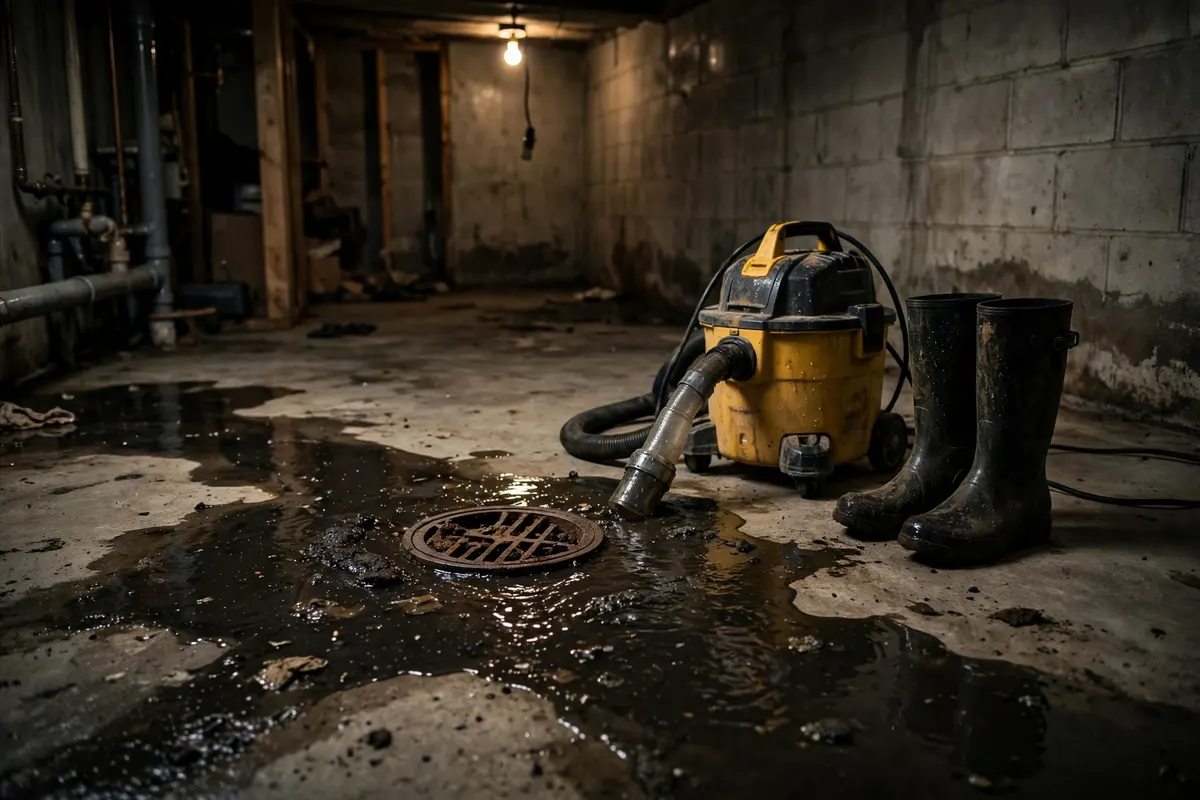
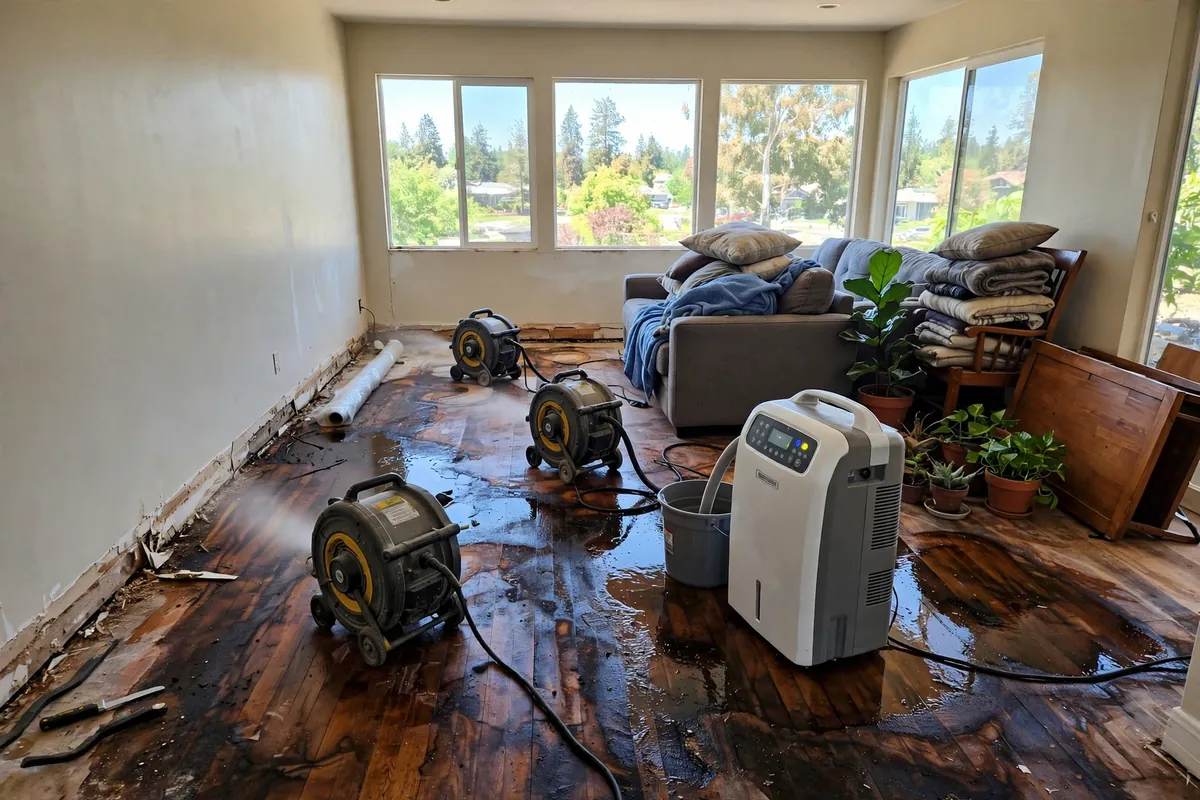
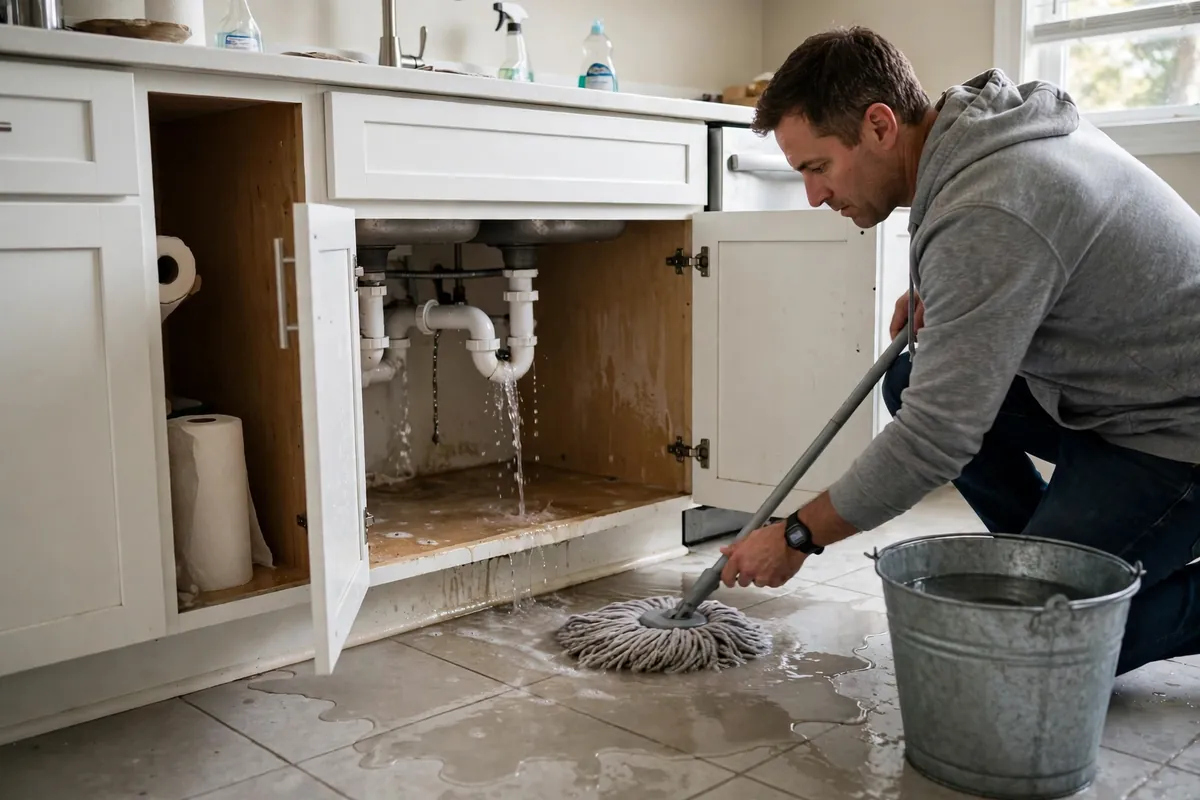
Open the lowest faucets in the house and flush toilets to drain pressure out of the lines. Then get water up: towels, a wet/dry vacuum, buckets, and a mop all buy time. Move furniture, rugs, and boxes off wet floors, and pull baseboard-adjacent items away from walls. The faster surfaces dry, the less chance of warped flooring and mold, which can start within 24 to 48 hours.
4. Document everything before you clean further
Take photos and short video of the break, the water spread, and damaged belongings before repairs begin. Insurers pay claims based on evidence, and the 'after' is always easier to show than the 'during.' Keep receipts for cleanup supplies and any emergency service — most policies cover reasonable steps you took to limit the damage.
5. Call an emergency plumber — and ask the right questions
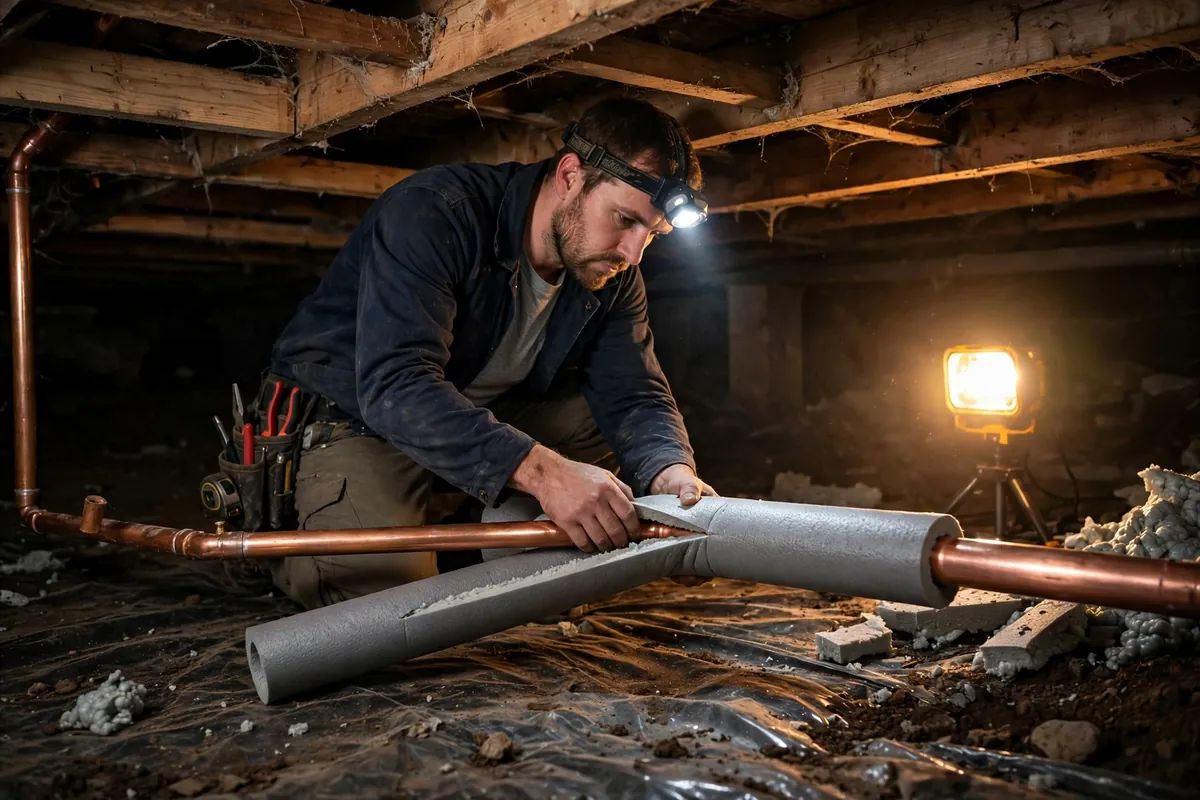
A burst pipe needs a proper repair, not a patch: the failed section should be cut out and replaced, and the plumber should check whether pressure, corrosion, or freezing caused it so it doesn't happen again next month. When you call, ask whether they carry common pipe sizes on the van, whether you'll get the price before work starts, and whether they'll inspect the neighboring pipe runs while they're there.