A failing sewer line rarely announces itself with the main event. Long before sewage backs up into a basement, the line sends quieter signals — sounds, smells, and lawn changes that Brighton homeowners often blame on smaller problems for months. Catching a sewer issue at the whisper stage is the difference between a jetting visit and an excavation. Here are the six warnings that should move a sewer inspection to the top of your list.
1. Multiple drains slow down at once
One slow sink is a local clog. A slow tub, a toilet that bubbles when the washer drains, and a kitchen sink that's backing up in the same week is a main-line pattern: everything in the house drains through one pipe to the street, and when that pipe narrows, the whole house feels it. This is the single most-missed pattern we see — each fixture gets treated separately while the shared line keeps closing.
2. Gurgling, bubbling, and toilet water that moves
Air has to go somewhere. When a sewer line is partially blocked, air in the pipe gets pushed back through traps — that's the gurgle from the tub drain when you flush, and the toilet whose water level rises or dances when the washing machine pumps out. Gurgling is your sewer line's check-engine light: occasionally harmless (a venting quirk), but persistent gurgling deserves a look.
3. Sewer smells indoors or in the yard
A healthy system is sealed: gases exit through the roof vent, never into the house. Sewage odor at a floor drain, in a basement, or outside along the line's path to the street can mean a dry trap, a cracked line venting into soil, or waste sitting where it should be flowing. Smell that survives trap refills and cleaning is a pipe problem, not a housekeeping problem.
4. The lawn tells on the line
A failing sewer line leaks nutrient-rich water into the soil, and grass responds: one strip or patch along the line's route that's noticeably greener, lusher, or faster-growing than the rest of the yard. The darker version of the same sign is a soggy, sunken area over the line — soil washing into a crack or settling over a deteriorating pipe. Either one is worth a camera.
5. Backups at the lowest drain first
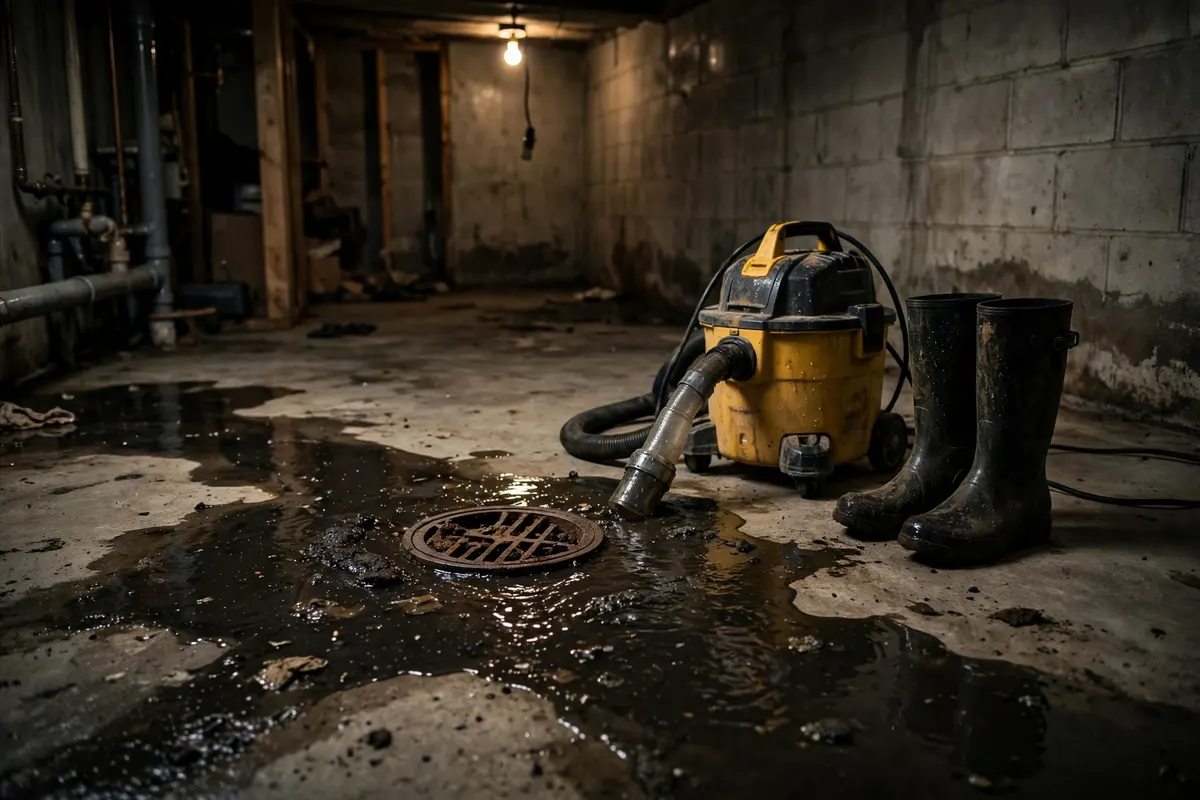
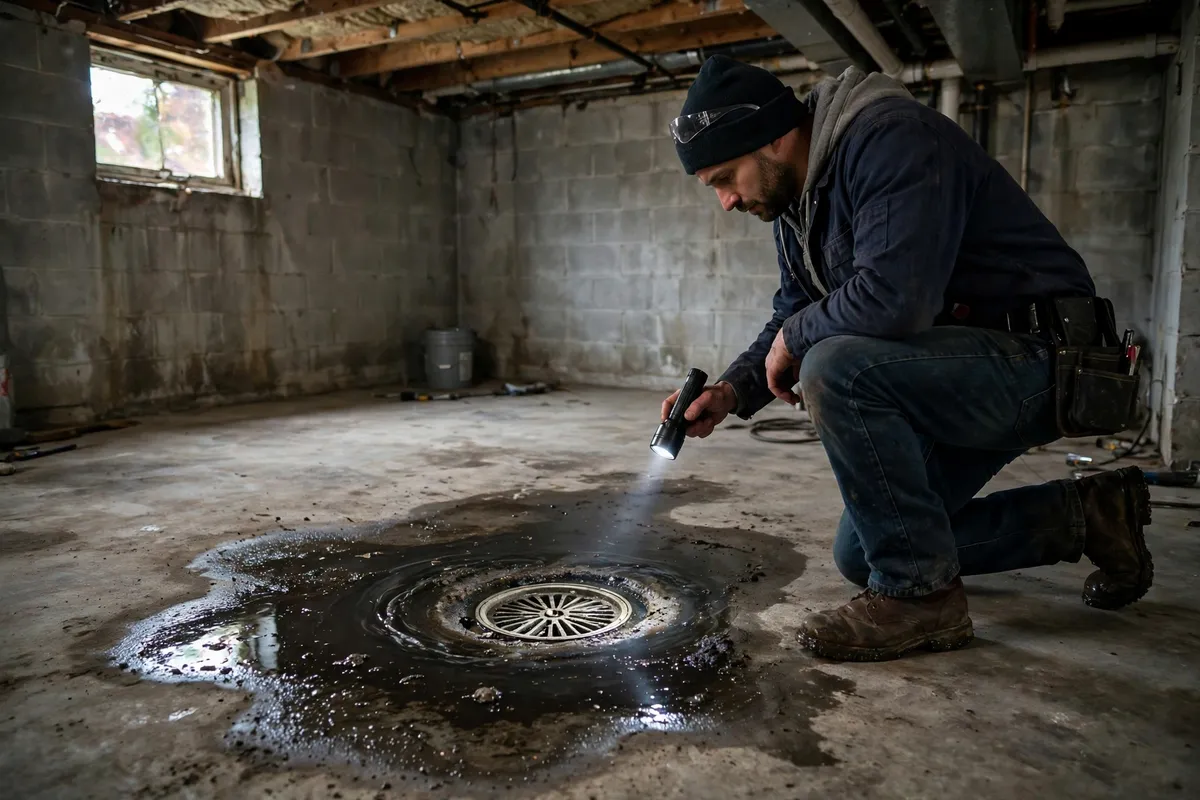
When a main line blocks completely, sewage takes the lowest exit — usually a basement floor drain, a basement tub or shower, or a first-floor toilet. If your lowest fixtures back up during heavy water use (laundry day, guests showering), the line is already past warning and into failure. Stop running water, and treat it as the emergency it is: every gallon you send down is a gallon looking for that low drain.
6. Roots, age, and material: the risk factors
Even without symptoms, some Brighton lines deserve a preemptive inspection: clay-tile lines in older neighborhoods (root-friendly joints every few feet), any line shaded by large trees whose roots seek sewer moisture relentlessly, and cast-iron lines past 40 years, which corrode from the inside out. A camera inspection on a calm Tuesday costs a fraction of an emergency excavation on a holiday weekend.