When a drain clogs twice in a few months, homeowners in Brighton ask us the same question: last time the plumber snaked it, so why is it back? The honest answer is that snaking and hydro jetting do different jobs, and one of them — chosen wrong — is a temporary fix by design. Here's how the two methods actually differ, what each costs in terms of results (not just dollars), and how to know which one your drain needs.
What a snake actually does
A drain snake (or auger) is a steel cable with a cutting or retrieving head. Fed into the pipe, it bores through the blockage — pulling out hair and debris near the opening, or punching a channel through a heavier clog so water flows again. For a single slow sink or tub, especially a hair clog near the trap, a snake is exactly the right tool: fast, simple, effective. Its limit is geometry: the cable passes through the clog, but it doesn't clean the pipe wall it traveled through.
What hydro jetting does differently
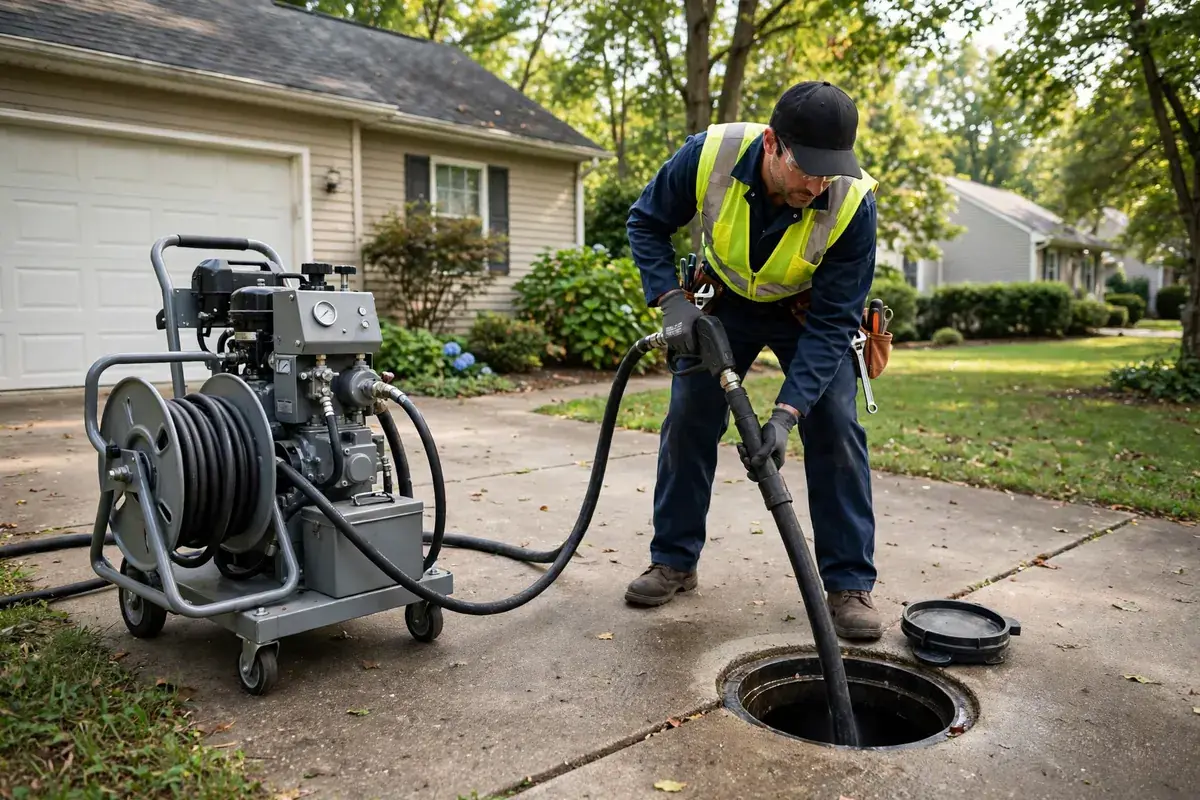
Hydro jetting pushes a specialized nozzle through the line on a hose delivering water at up to 4,000 PSI. The jets scour the full circumference of the pipe wall — grease, scale, soap film, and sludge come off, not just the plug in the middle. Tree roots get shredded and flushed rather than trimmed. The result isn't a hole through the clog; it's a pipe interior close to its original diameter, which is why a jetted line typically stays clear far longer.
When snaking is the right call
For isolated, recent clogs in a single fixture — the bathroom sink full of hair, the tub draining slowly, a kitchen line with a soft blockage near the trap — snaking is proportionate and economical. It's also the safer first step in older or fragile pipe, where a plumber may want a camera inspection before deciding whether the line can take jet pressure at all.
When jetting earns its keep
Jetting is the answer when clogs keep coming back, when grease is the culprit (kitchen lines and restaurants), when the main sewer line is involved, and when roots keep returning after snaking. Recurring clogs almost always mean the pipe wall itself is the problem — buildup has narrowed the line until anything passing through starts the next clog. In that situation, the third snake in a year costs more than one jetting that actually resets the line.
The step that settles it: a camera inspection
Before choosing for a main line, a camera inspection shows what's actually in the pipe — grease, roots, a belly (sag), a crack, or a collapsed section. Jetting a collapsed pipe wastes money; snaking a grease-choked line wastes the visit. On any recurring clog, the camera comes first on our trucks, because the right method follows directly from what the pipe shows us.