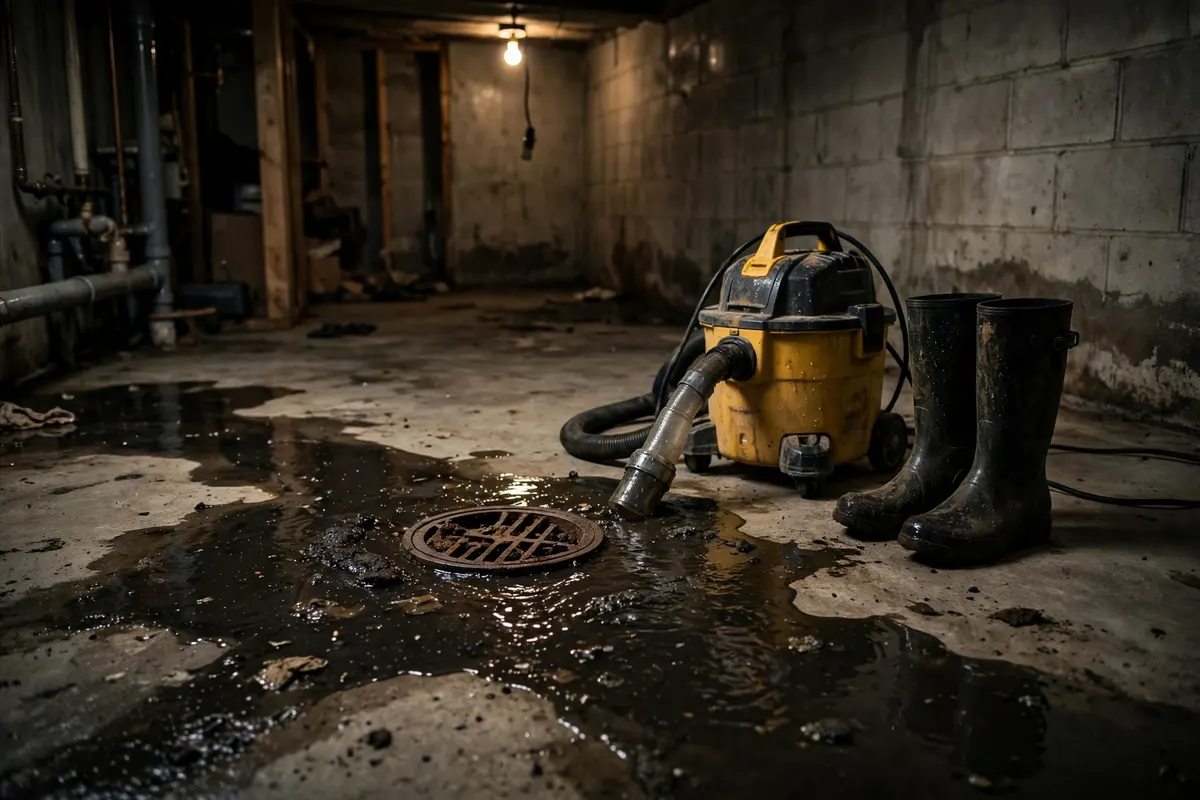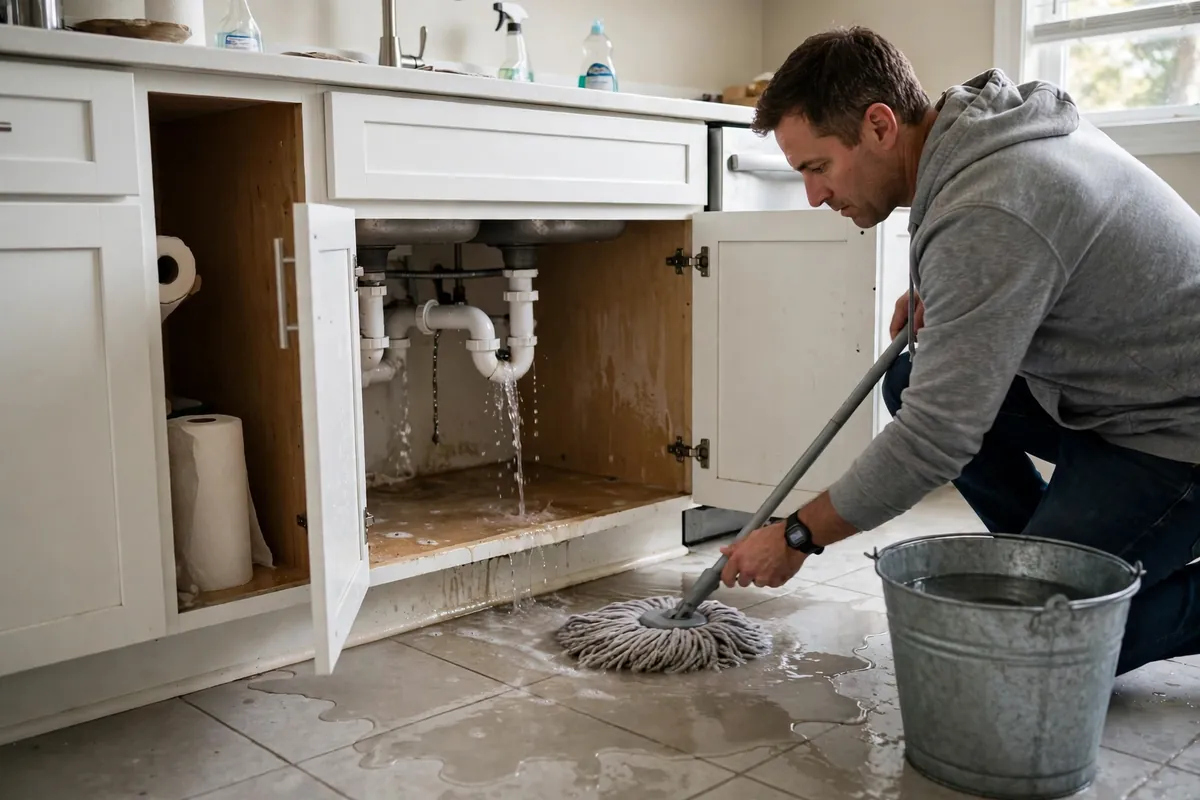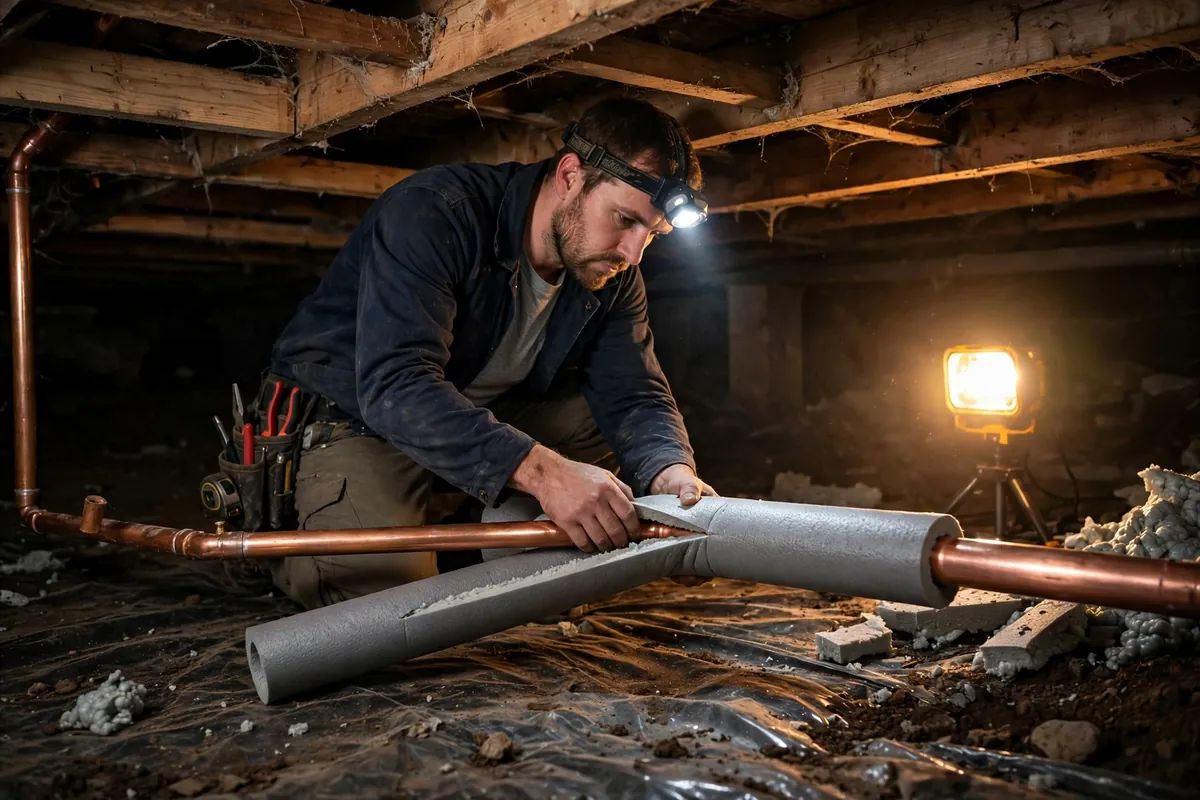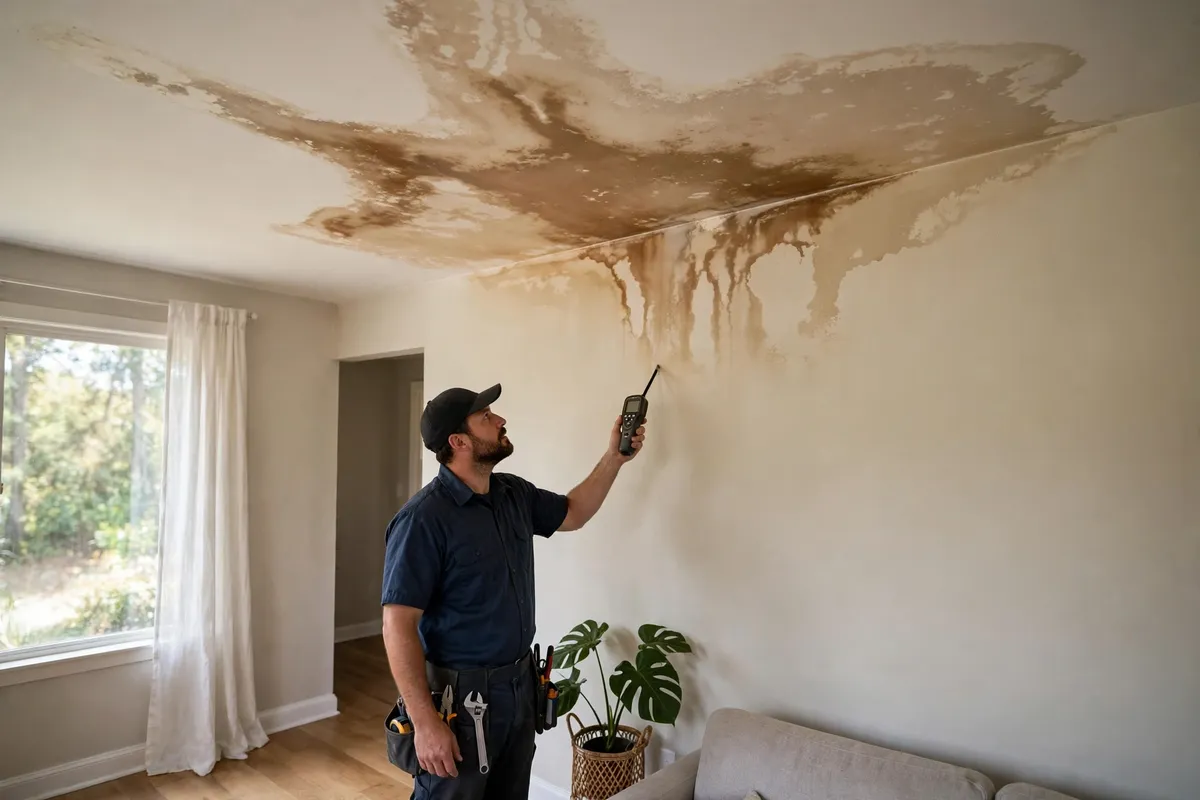
The leaks that cost Brighton homeowners the most money are rarely the dramatic ones. A burst pipe gets fixed the same day. A pinhole leak inside a wall or under a slab can run for months — soaking framing, feeding mold, and adding hundreds of gallons to every water bill — before anyone realizes water is moving at all. The good news: hidden leaks almost always leave evidence. These are the eight signs we ask about on every leak-detection call, and how professionals pinpoint a leak once the signs point to one.
The signs you can check yourself
Start with these — several take under five minutes:
- Your water meter keeps moving when no water is being used anywhere in the house.
- The water bill jumped without any change in your habits or household size.
- A room smells musty or earthy even after cleaning — often a wall or floor cavity staying damp.
- Paint bubbles, drywall softens, or baseboards separate near a wet wall.
- You hear water running or hissing when every fixture is off.
- One spot in the floor feels warm (a hot-water line leaking under a slab) or cold and damp.
- Mold or mildew keeps returning in the same place no matter how often you clean it.
- Water pressure has faded in one area of the house for no clear reason.
The meter test: your five-minute confirmation
Turn off every faucet, appliance, and the ice maker. Find your water meter and note whether the leak indicator (a small triangle or dial) is moving. Wait an hour without using any water and check again. A meter that moved with everything off means water is going somewhere — and if no fixture is responsible, it's leaving through a leak. Shutoff valves let you split the house in half: close the house valve and re-check to separate an interior leak from an irrigation or service-line leak.
How pros locate a leak without tearing the house apart
Modern leak detection is mostly listening and measuring, not demolition. Acoustic sensors amplify the sound pressurized water makes escaping a pipe — through drywall, flooring, even concrete. Thermal cameras show the temperature trail a hot-water leak leaves inside a wall. Moisture meters map how far water has traveled from the source. Correlating those three usually puts the opening within a small section of wall or floor, so the access hole is surgical instead of exploratory.
Slab leaks: the special case
Brighton homes on slab foundations carry supply lines in or under the concrete. A slab leak shows up as a warm floor spot, a mysteriously wet patch of carpet, foundation cracks that weep, or a hot-water bill spike. Repair options range from opening a small section of slab at the leak, to rerouting the line overhead through walls and attic — often the smarter long-term fix for older copper that's failing in multiple spots.
What to do while you wait for the plumber
If the meter test confirms a leak, shut off the fixture or zone if you can isolate it, move belongings off the affected floor, and photograph everything. Don't ignore it hoping it's small: a pinhole at full city pressure can pass hundreds of gallons a day, and insurers are far friendlier to leaks that were addressed promptly than to ones that soaked a house for a season.