Brighton's water is hard — it carries enough dissolved calcium and magnesium that mineral scale builds up inside pipes, on fixtures, and inside your water heater a little more every day. It rarely causes a dramatic failure. Instead it quietly shortens appliance life, narrows pipes, and raises energy bills for years before anyone connects the dots. These are the seven signs our plumbers look for — and what each one is really telling you.
The visible signs: crust, spots, and film
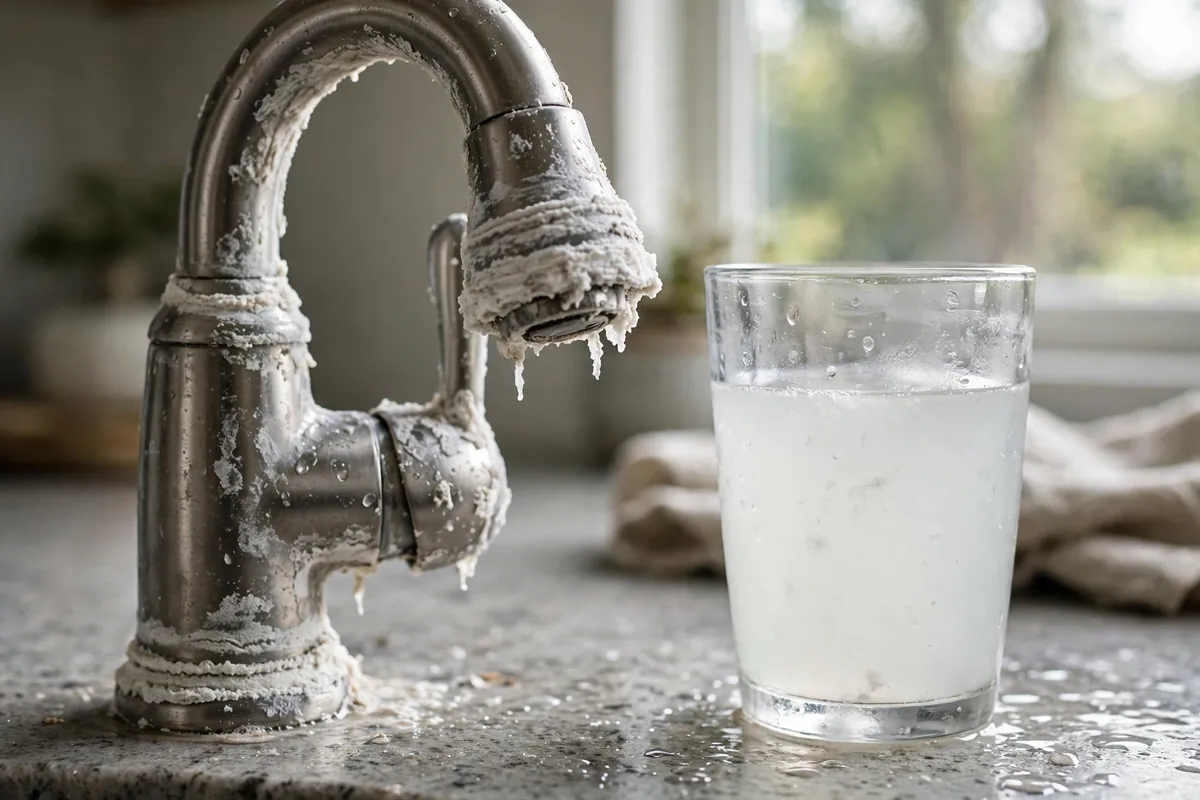
White or greenish crust around faucet aerators and showerheads is scale forming where water evaporates. The same minerals spot your dishes, leave a chalky film on shower glass, and stiffen laundry. These are cosmetic annoyances, but they're also a meter reading: if scale is growing where you can see it, it's growing where you can't — inside supply lines and appliance valves.
The water heater signs: rumbling and higher bills
A tank water heater in hard-water country collects sediment on the tank floor. The popping, rumbling, or kettle sounds you hear are steam bubbles fighting through that sediment layer. Two costs follow: the burner runs longer to push heat through the sediment (higher gas bills), and the overheated tank floor corrodes faster (a shorter-lived heater). Annual flushing keeps sediment from cementing; neglected tanks in our area often give up years early.
The flow signs: pressure that slowly fades
Scale narrows pipes from the inside, and it clogs the small passages in showerheads, faucet aerators, and appliance fill valves first. If your pressure has declined gradually across the whole house over years — no single event, just a slow fade — mineral buildup is a prime suspect, along with aging galvanized pipe, which both narrows and corrodes.
The appliance signs: dishwashers and washers dying young
Dishwashers that leave grit, washing machines that fill slowly, ice makers that quit — hard water shortens the life of every appliance that heats or meters water. When a Brighton homeowner replaces a dishwasher at year six of a twelve-year expected life, minerals are usually part of the autopsy.
What actually helps
A water softener is the only fix that addresses the cause: it removes calcium and magnesium before they enter the plumbing, stopping new scale and slowly softening some existing deposits at fixtures. Salt-free conditioners change how minerals behave but don't remove them. Whatever you choose, pair it with the basics: flush the water heater annually, clean aerators and showerheads with vinegar soaks, and descale appliance filters. If your pressure has already faded, a plumber can tell you how much is scale and how much is pipe age.